- Silica Free News
- Posts
- Silica-Free Countertop Options 2026: Complete Guide to Engineered Stone + Alternatives
Silica-Free Countertop Options 2026: Complete Guide to Engineered Stone + Alternatives

Silica Free News Staff
February 06, 2026

The North American surfacing industry has reached a definitive turning point in 2026, transitioning from a reactive stance on occupational health to a proactive, technology-driven paradigm of total silica management.
For designers, architects, fabricators, and distributors, the landscape is no longer defined by the traditional 93% quartz slab, but by a sophisticated array of mineral-based, bio-composite, and high-recycled-content alternatives that eliminate the risks associated with respirable crystalline silica. This transition is underpinned by the most stringent regulatory environment in US history, particularly in California and other high-safety jurisdictions, which has forced a realignment of the supply chain from the quarry to the kitchen.
The Regulatory Tipping Point: North American Landscape in 2026
The regulatory framework governing the stone countertop industry in 2026 is the culmination of over a decade of escalating health concerns and legislative intervention. The first reported case of silicosis associated with engineered stone in the United States was identified in Texas in 2014, marking the beginning of a public health crisis that would eventually lead to the radical shift in material science seen today.1 By the mid-2020s, California had logged more than 230 confirmed silicosis cases and 14 deaths since 2019, prompting an emergency response from workplace safety regulators.2
In response to this epidemic, the regulatory focus has shifted from simple exposure limits to comprehensive task-based prohibitions and mandatory certifications. The Federal Occupational Safety and Health Administration (OSHA) maintains a Permissible Exposure Limit (PEL) of 50µg/m3 and an Action Level of 25µg/m3 for respirable crystalline silica (RCS), calculated as an 8-hour time-weighted average (TWA).1
However, research has increasingly demonstrated that traditional engineering controls—such as basic wet-cutting and standard respirators—are often insufficient to keep exposure levels below these thresholds when working with high-silica engineered stone.3 Australian research, which has heavily influenced North American policy, indicated that nano-sized silica particles released during the fabrication of artificial stone can bypass even dual-cartridge filtered respirators, leading to the continued inhalation of hazardous dust.3

The Low Silica / No Silica Cheat Sheet
The 2026 Countertop Silica Classification Guide breaks down what each classification actually means, where the Q-rating system applies, and which brands fall where — so you can specify or stock with confidence.
California Senate Bill 20 and the Fabrication Mandate
The most impactful piece of legislation in the current market is California’s Senate Bill (SB) 20, which has effectively restructured the industry's economic model. Effective July 1, 2026, any person or business operating a stone slab fabrication shop or hiring workers for high-exposure trigger tasks must comply with a rigorous new safety and reporting regime.5 High-exposure trigger tasks (HETTs) are defined as any cutting, grinding, drilling, polishing, or cleanup that disturbs artificial stone containing more than 0.1% silica or natural stone containing more than 10% silica by weight.2
Under SB 20, the definition of a "serious injury or illness" has been expanded to include silicosis and silica-related lung cancer resulting from occupational exposure.5 This legal classification creates a presumption of a "serious violation" if a risk of death or serious physical harm exists, empowering Cal/OSHA to issue immediate Orders Prohibiting Use (OPU) and significant civil penalties.5 The financial implications are profound; in 2024 alone, more than a quarter of California’s inspected stone shops were shut down due to routine violations, and the 2026 penalty schedule caps serious citations at $25,000 per violation, with willful or repeat violations reaching up to $162,851.2
Key Compliance Milestone | Requirement and Professional Impact | Effective Date |
Mandatory Wet Processing | Prohibition of dry cutting/grinding; continuous water flow required.2 | Immediate |
Annual Safety Attestation | Employers must submit proof of worker training and compliance.5 | July 1, 2026 |
Shop Safety Certification | Mandatory 3-year certification for all fabrication facilities.5 | January 1, 2027 |
Supplier Restrictions | Distributors may only sell slabs to certified fabrication shops.5 | January 1, 2027 |
24-Hour Medical Reporting | Confirmed silicosis cases must be reported within one business day.2 | Active |
Federal Implications and the Task-Based Assessment Model
While California often leads the US in workplace safety, the move toward a task-based risk assessment model is becoming a national trend. This model presumes that any disturbance of materials containing crystalline silica is hazardous, shifting the burden of proof to the employer to demonstrate that their controls are effective.6 In the past, enforcement required lengthy 8-hour air monitoring to prove a hazard; in 2026, regulators can act immediately if they observe visible dust or improper respirator use.6
This regulatory environment has created a massive market opportunity for Category 1 silica-free materials. Distributors and manufacturers are increasingly moving away from high-silica products to avoid the liability of selling materials to non-certified shops. For designers and architects, specifying silica-free options is no longer just a trend but a risk-mitigation strategy, ensuring that their projects are not delayed by stop-work orders or supplier restrictions affecting their fabrication partners.
Category 1: The Engineered Stone Revolution (Silica-Free)
Category 1 represents the "New Era" of engineered stone, where technological innovation has successfully separated the performance characteristics of quartz from its mineral hazards. These materials, including ICON, ZERO, BioQuartz, and Revolux, utilize alternative aggregates and advanced manufacturing processes to achieve a crystalline silica content of less than 1%.

BioQuartz: The Amorphous Material Breakthrough
BioQuartz®, pioneered by Breton S.p.A., is perhaps the most significant technological leap in the industry. Traditional quartz surfaces use crystalline silica, which has a rigid, repeating molecular structure that becomes sharp and hazardous when fractured into dust.9 BioQuartz® undergoes a pyrolytic fusion process at approximately 1500°C, transforming common siliceous and feldspar sands into a synthetic, amorphous (non-crystalline) structure.9 This amorphous material possesses the same technical and aesthetic properties as natural quartz—including a Mohs hardness of 7—but does not cause silicosis if inhaled, because the body can clear amorphous particles more effectively than the inflammatory crystalline form.9
In North America, the Radical Surfaces facility in Garland, Texas, will become the primary domestic source for BioQuartz® surfaces.9 Scheduled to reach full scale in late 2026, this plant addresses a projected domestic supply gap of 140 million square feet of engineered stone annually.12 By producing surfaces locally using Breton's next-generation technology, Radical Surfaces eliminates the international shipping costs and supply chain instabilities that have plagued the industry since 2021.12 For the fabricator, the advantage is seamless; BioQuartz® slabs perform identically to traditional quartz on the saw and polishing line, requiring no changes in tooling or adhesives.9
Revolux ZERO: Recycled Glass and Nanotechnology
Revolux has redefined the luxury mineral surface market with its "Zero Silica" product line. These surfaces are composed of nearly 80% recycled glass and are meticulously engineered to contain less than 1% crystalline silica.13 Revolux employs patented 5D Nano-INK technology, which injects pigments up to 1mm deep into the surface under high pressure and temperature.14 This eliminates the visual "flatness" seen in earlier generations of printed stone, creating a three-dimensional depth that imitates natural marble with remarkable realism.15
Revolux also integrates NEOS technology into its surfaces, a proprietary system that creates a permanent, invisible hybrid protectant that repels both acidic and basic substances (pH 1 to pH 13).15 This makes Revolux an ideal choice for commercial interiors, such as hospitals and schools, where durability and hygienic performance are critical.15 For professionals, Revolux offers the "4R" advantage: Reduce, Recycle, Reuse, and Respect, utilizing 100% reused water in its production process.13
Caesarstone ICON: The Strategic Transition
Caesarstone, having pioneered the quartz countertop category nearly four decades ago, has launched its ICON™ collection as part of a strategic vision to transition its entire portfolio to crystalline silica-free surfaces by the end of 2026.19 ICON is a "revolutionary advanced fusion surface" formulated with approximately 80% recycled content, including post-industrial glass.20 It has been recognized with the 2026 Good Housekeeping Kitchen Award for its durability and environmental consciousness.21
The ICON collection is engineered for unmatched robustness, offering superior scratch, impact, and flexural resistance compared to many traditional stones.20 For architects, Caesarstone ICON simplifies the specification process by providing a direct aesthetic replacement for marble and quartzite—such as the Travina (travertine look) and Rugged Concrete designs—without the ethical or safety drawbacks of high-silica products.22
Technical Property | Traditional Quartz (93%) | BioQuartz® / ICON / ZERO | Impact on Professional Market |
Crystalline Silica Content | 90% – 95% 4 | <1% (Zero Rated) 13 | Eliminates the primary risk of silicosis. |
Mohs Hardness | 7 9 | 7 9 | No change in scratch resistance or durability. |
Fabrication Method | High-Risk; Mandatory Wet 5 | Low-Risk; Familiar Techniques 9 | Reduces liability and insurance premiums. |
Recycled Content | 0% – 20% 24 | 70% – 80%+ 13 | Contributes to LEED and green certifications. |
Heat Resistance | Low (Sensitive to >212°F) 25 | Similar to Quartz 21 | Requires standard use of trivets. |

Category 3: Diversified Alternatives and Sustainable Materials
While Category 1 represents the evolution of engineered stone, Category 3 includes a diverse set of materials that have long served as high-performance, silica-free alternatives. These materials—ranging from recycled glass and paper composites to natural soapstone and industrial metals—are seeing a surge in 2026 due to their inherent safety and transparent supply chains.
Recycled Glass: IceStone and Vetrazzo
IceStone and Vetrazzo remain the premier options for high-performance surfaces made from recycled glass. IceStone, manufactured in the United States, uses a simple, transparent formula of recycled glass, Portland cement, and non-toxic pigments.24 It is explicitly certified as crystalline silica-free and emits zero Volatile Organic Compounds (VOCs), making it an essential specification for LEED-certified projects.24
Vetrazzo, handcrafted in Georgia, takes an artistic approach to surfacing. Each slab is unique, with hand-positioned glass pieces that range from recycled wine bottles to traffic light lenses.24 Vetrazzo is highly durable and heat-resistant, although it requires professionals to use non-abrasive cleaners to maintain its polished finish.30 Both brands are distributed by IceStone LLC, which has positioned itself as a "B-Corp" leader in sustainable surfacing.1
Natural Stone: Soapstone
Soapstone is a metamorphic rock composed primarily of talc, making it naturally free of crystalline silica.24 It is widely considered the "workhorse" of the kitchen due to its non-porosity and exceptional thermal properties.24 Unlike granite or marble, soapstone is chemically inert and will not etch from acids like lemon juice or wine.24
In 2026, soapstone is trending for its "living finish." While it is a softer stone (can be scratched by a knife), many owners appreciate the character it develops over time, and minor scratches can be buffed out with light sanding.24 It is typically treated with mineral oil to darken its natural light grey to a deep charcoal or black, aligning with the 2026 trend toward moody, earth-driven palettes like MSI’s "Velvet Truffle" look.24
Paper Composites: PaperStone
PaperStone represents one of the most innovative uses of recycled materials in the surfacing industry. It is a heavy-duty composite made from 100% post-consumer recycled paper and a proprietary PetroFree™ resin.33 The manufacturing process involves saturating sheets of paper with resin and pigments, then compressing them under intense heat and pressure to create a dense, non-porous slab.33
PaperStone is as strong as steel in span and as beautiful as fine hardwoods.33 It is NSF certified for direct food contact and can withstand temperatures up to 350°F, far exceeding the heat resistance of most resin-based engineered stones.33 From a fabrication perspective, PaperStone can be worked with high-quality woodworking tools, offering designers a warm, matte texture that is increasingly popular in 2026.33
Solid Surface: Corian
Corian® Solid Surface, composed of natural minerals and an acrylic resin binder, contains zero silica and poses no risk of silica exposure during fabrication or installation.38 It is the original "repairable" surface; because it is homogeneous throughout its thickness, it can be seamlessly joined and renewed to its original state if damaged.38
Corian is particularly favored in the 2026 market for its "Net Zero 2030" sustainability commitment and its non-porous, hygienic properties.38 It is Red List Free and GREENGUARD Gold certified, making it a primary choice for high-traffic public spaces and healthcare facilities.38 The material’s ability to be thermoformed into curved shapes aligns with the "Vintage Villa" and "Light & Luster" design trends, which emphasize gentle curves and organic forms.32
Industrial Metals: Stainless Steel
Stainless steel countertops are the quintessential choice for high-end residential and professional kitchens. In 2026, they are valued for their professional look and "industrial metal" aesthetic.37 While stainless steel is a premium investment—costing between $100 and $150 per square foot—it provides a lifetime of use with zero maintenance beyond cleaning.37 Its total lack of silica makes it a 100% safe material for fabricators and installers.
Architects: before writing any of these into a spec, read our guide on what you need to know when specifying silica-free countertops — certifications, LEED v5 connections, and fabricator briefing notes.

Safety Improvements in the US Fabrication Market
The year 2026 has seen a complete overhaul of the American stone fabrication shop. The historical reliance on simple ventilation and dust masks has been replaced by an integrated system of engineering controls, advanced respiratory protection, and medical surveillance.
Engineering Controls and Housekeeping
The cornerstone of silica safety in 2026 is the absolute prohibition of dry methods for any high-exposure tasks.5 All fabrication shops are now required to use "effective wet methods," which include continuous water flow to the tool's point of contact or the full submersion of the material being cut.2 This prevents the dust from ever becoming airborne.
Housekeeping rules have also tightened; dry sweeping and the use of compressed air to blow off dust are banned.2 Instead, shops must use HEPA-filtered vacuums or wet-cleanup methods.2 Modern shops are increasingly utilizing water-recycling systems that capture "sludge" from the cutting process, preventing it from drying and re-entering the environment as respirable dust.2
The New Standard in Respiratory Protection
For workers engaged in high-exposure trigger tasks, the minimum standard for respiratory protection in 2026 is a Powered Air-Purifying Respirator (PAPR).2 These devices use a battery-operated blower to pull air through HEPA (N100, R100, or P100) filters and deliver a constant stream of clean air to the wearer’s facepiece.2
Under the permanent Cal/OSHA standard, a tight-fitting PAPR is the default for HETTs, and employers must demonstrate that their exposure levels are consistently below the action level through semi-annual air monitoring before they are allowed to "downgrade" to half-mask respirators.2 Furthermore, when working with artificial stone, combination organic vapor cartridges are now mandated to protect against the chemical resins used in slab production.6
Medical Surveillance and Workplace Culture
A critical component of the 2026 landscape is the mandatory medical surveillance program for exposed workers. Employers must provide baseline and periodic medical exams (at least every three years) at no cost to the employee.2 These exams include high-resolution chest imaging and lung function tests, which are more effective than standard X-rays at identifying early-stage silicosis.2
Crucially, the 2026 regulations include "Medical Removal Protection," which provides wage retention for up to six months if a worker must be removed from silica-exposed tasks due to health concerns.2 This ensures that workers do not fear reporting symptoms or participating in health screenings, fostering a more transparent safety culture.

Professional Installation and Performance Standards
The physical properties of silica-free and alternative materials often differ from traditional granite or high-silica quartz. Professionals must adapt their installation techniques to accommodate these new material compositions.
Adhesives, Seaming, and Anchoring
For Category 1 materials like Revolux and Caesarstone ICON, seaming requires specialized two-part acrylic or epoxy adhesives that are color-matched and UV-stable.34 Because these materials are non-porous, the "Stone Seam" trial kits and high-performance structural acrylics (MMA) are becoming the industry standard to ensure joints are virtually invisible.44
For undermount sink installations, the 2026 best practice has moved toward mechanical anchoring systems like the Keep-Nut®.44 These high-strength, stainless steel inserts eliminate the need for adhesives and the associated curing time, providing a universal anchoring solution for stone, quartz, and porcelain that is both faster and stronger than traditional methods.44
Structural Support and Substrate Requirements
Silica-free materials, particularly those with high recycled glass content (Category 1) or paper composites (Category 3), have specific support requirements to prevent cracking and deflection.
Support Spans: For 2cm (3/4 inch) material, support is generally required every 36 inches if the depth exceeds 26 inches.13
Cantilever Limits: A 1/2 inch PaperStone sheet will cantilever up to 9 inches, while a 3/4 inch sheet can cantilever 18 inches with less than 1/16 inch of deflection.33
Expansion Gaps: All stone-like surfaces require a minimum 1/8 inch expansion gap at walls and hard transitions to accommodate thermal movement.25
Substrates: Solid perimeter or full-surface substrate support using plywood or cement board is recommended; moisture-sensitive materials like OSB are generally not acceptable for premium stone installations.13
Handling and Inspection Protocols
The 2026 professional standard for handling slabs emphasizes prevention of surface damage and structural failure. Slabs should never be transported horizontally; they must remain on "A" frames until the moment of fabrication.25 Professionals must visually verify color matches and check for defects—such as fissures or color pooling—before the first cut is made, as many manufacturers will not accept returns once fabrication has commenced.25
Market Analysis and Economic Outlook 2026
The market for countertops in 2026 is robust, with a total estimated size of $161.23 billion and a 3.92% CAGR projected through 2031.47 However, the economic value is increasingly concentrated in premium, silica-free, and sustainable materials.
Pricing Tiers and Long-Term Value
While silica-free options carry a higher upfront cost than entry-level granite, their long-term value is driven by their extreme durability, lack of maintenance requirements, and the reduced health risks for the workforce.
Material Tier | Cost per Sq Ft (Installed) | Key Driver of Price |
Entry-Level Granite | $40 – $60 26 | Availability / Commodity |
Traditional Quartz (Mid) | $60 – $100 49 | Brand / Aesthetic |
Silica-Free (BioQuartz / ICON) | $60 – $150+ 48 | Technology / Health Safety |
Soapstone / Natural Luxury | $70 – $120 24 | Rarity / Thermal Performance |
Artistic Recycled Glass | $85 – $165 30 | Craftsmanship / Uniqueness |
PaperStone / Bio-Composite | $50 – $100 33 | Performance / LEED credits |
Supply Chain Reshoring and the US Market
A significant trend in 2026 is the "reshoring" of engineered stone manufacturing. The domestic shortage of 140 million square feet of surfacing material annually has made US-based plants, like the Radical Surface facility in Texas, highly attractive to developers and distributors.12 By manufacturing in the US, companies can ensure their products meet the latest OSHA and Cal/OSHA standards while avoiding the volatility of international shipping and trade tariffs.12
Distributors are also increasingly picky about their partnerships. Under the new California laws, distributors must verify the safety certification of any shop they supply.5 This creates a "flight to quality," where only the most professional and safety-conscious fabricators can access the highest-demand materials.5
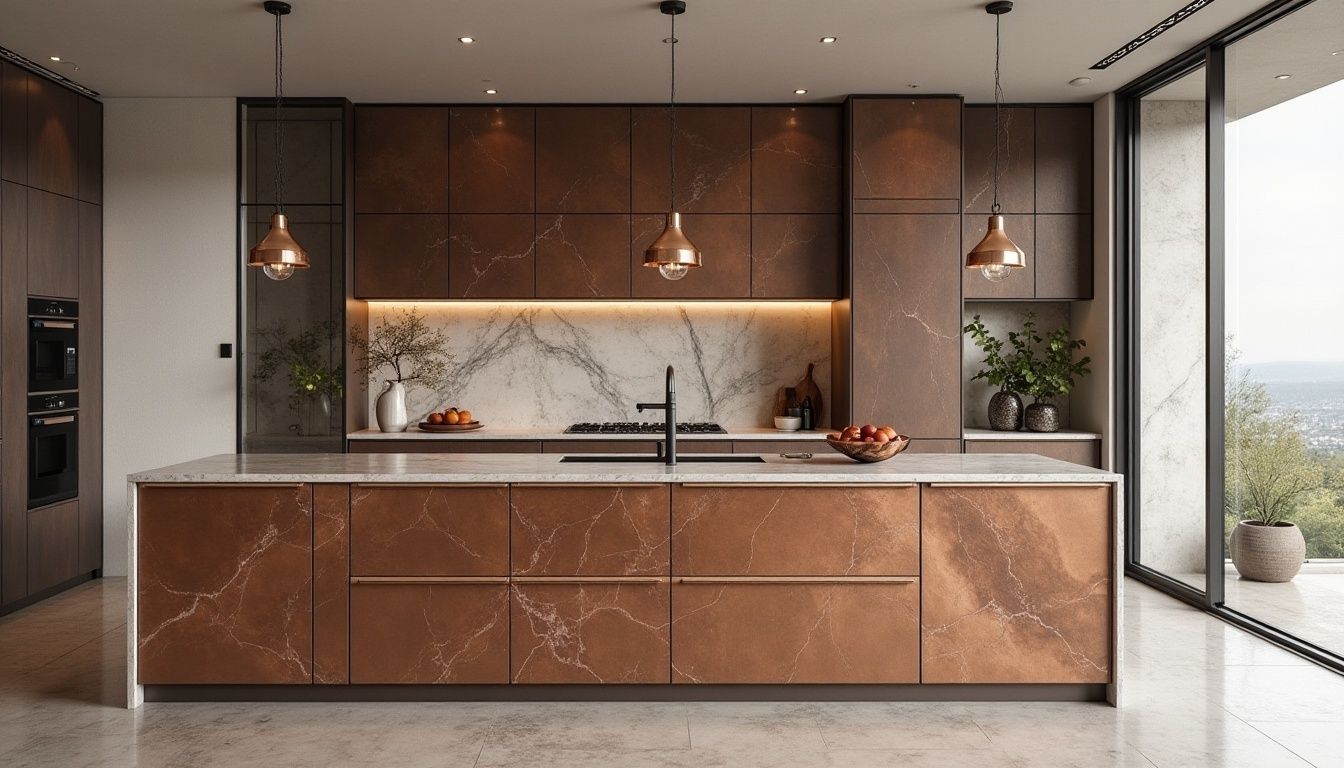
Design Trends for 2026: Aesthetics in the Post-Silica Era
The 2026 design landscape is defined by "Authentic Modern Luxury," a shift toward materials that look, feel, and perform naturally while being responsibly sourced.36
Color Palettes and Finishes
Stark white and cool gray are giving way to "Warmer Color Palettes".23
Light & Luster: Creamy off-whites, soft ivories, and warm neutrals like MSI’s "AuraTaj" quartz are becoming the foundation of light-filled interiors.23
Vintage Villa: A palette of earth-driven hues—plum, sage green, and muted terracotta—is emerging, often paired with expressive stone veining.23
Matte & Textured: High-gloss surfaces are being replaced by honed, leathered, and "velvet" finishes that offer a soft, lived-in feel and help hide fingerprints and water spots.36
Statement Stone and Organic Forms
In 2026, stone is no longer just a surface; it is a "Design Feature".36
Waterfall Islands and Full-Height Backsplashes: These applications highlight the dramatic, bold veining found in modern silica-free materials that mimic Calacatta Viola or Taj Mahal quartzite.23
Sculptural Edges: Edges are becoming more furniture-like, with ogee, cove bullnose, and curved profiles making a comeback as fabrication technology allows for greater precision.37
Biophilic Inspiration: The integration of indoor and outdoor spaces is a major trend, favoring materials like porcelain and ultra-compact surfaces that are UV-resistant and can withstand the elements.23
Conclusions and Strategic Roadmap for Professionals
The transition to silica-free countertop options in 2026 is a necessary evolution of the North American market. For the professional, success in this new landscape requires a commitment to both technical excellence and occupational safety.
Actionable Recommendations
For Architects and Designers: Re-evaluate your material libraries to prioritize Category 1 and Category 3 materials. Specifying materials like Caesarstone ICON, Revolux, or Soapstone provides your clients with a high-performance product while ensuring the safety of the workers who build their homes. Focus on materials with GREENGUARD Gold and Declare Red List Free certifications to meet the growing demand for healthy indoor environments.
For Fabricators: Invest in the required engineering controls—such as automated wet-cutting cells—and upgrade your respiratory protection program to include PAPR systems. Ensure that you are on track for safety certification by 2027 to maintain access to premium slab inventory. Adopt domestic supply partners like OK Stone to mitigate supply chain risks.
For Distributors: Realign your product mix to feature 0% to 10% silica options. The regulatory environment is effectively phasing out 93% quartz slabs in high-compliance regions; being ahead of this curve is a significant competitive advantage. Establish a robust system for verifying fabricator certifications to comply with new state mandates.
For Builders and Developers: Incorporate silica-free surfacing as a core component of your sustainability and ESG reporting. These materials contribute to LEED credits and provide a safer, more marketable product for the health-conscious homebuyer. The premium in cost is offset by the reduced risk of project delays and the long-term durability of these advanced fusion surfaces.
The countertop industry of 2026 has proven that innovation and safety are not mutually exclusive. By embracing the next generation of silica-free technologies, the North American surfacing market has created a future where beautiful, durable kitchens are built on a foundation of human health and environmental responsibility.
Disclaimer: Silica Free News is an independent publication covering silica-free and low-silica surface materials for distributors, architects, interior designers, and other industry professionals in the United States and Canada. Our content is provided for general informational purposes only and does not constitute legal, regulatory, technical, engineering, health and safety, or professional specification advice.
Although we make reasonable efforts to provide accurate and current information, product specifications, compositions, certifications, availability, and regulatory requirements may change. Readers should verify all material information directly with the manufacturer and consult the applicable legal, regulatory, or governmental authority before specifying, purchasing, fabricating, or installing any product.
Works cited
Silicosis in Stone Countertop Workers: Regulatory Update and, accessed February 6, 2026, https://www.mgmlaw.com/news-insights/silicosis-in-stone-countertop-workers-regulatory-update-and-proposed-legislation
Silica Exposure and Cal/OSHA's Silica Emergency Rule, accessed February 6, 2026, https://facs.com/blog/silica-exposure-and-cal-oshas-silica-emergency-rule/
New OSHA Silica Regulations 2025: Why Risks Remain, accessed February 6, 2026, https://www.braytonlaw.com/blog/new-osha-regulations-on-silica-exposure-what-workers-need-to-know/
Worker Exposure to Silica during Countertop - OSHA, accessed February 6, 2026, https://www.osha.gov/sites/default/files/publications/OSHA3768.pdf
California Adopts Standards for Artificial Stone Fabrication - Vensure, accessed February 6, 2026, https://vensure.com/employment-law-updates/california-adopts-new-standards-for-artificial-stone-fabrication/
FAQs for Cal/OSHA Emergency Standard - Natural Stone Institute, accessed February 6, 2026, https://www.naturalstoneinstitute.org/silica/faqs-for-cal-osha-emergency-standard/
Bill Text: CA SB20 | 2025-2026 | Regular Session | Chaptered, accessed February 6, 2026, https://legiscan.com/CA/text/SB20/id/3273333
California Adopts an Emergency Regulation to Tackle Occupational, accessed February 6, 2026, https://ogletree.com/insights-resources/blog-posts/california-adopts-an-emergency-regulation-to-tackle-occupational-silicosis-hazard/
What is a Silica Free Quartz Alternative?, accessed February 6, 2026, https://silicafreenews.com/p/what-is-silica-free-quartz-for-countertops-1d06
Plants | Bioquartz silica-free aggregate manufacturing plant | Breton, accessed February 6, 2026, https://breton.it/products/plants/bioquartz-silica-free-aggregate-manufacturing-plant
Silica (Crystalline) Profile - CAREX Canada, accessed February 6, 2026, https://www.carexcanada.ca/profile/silica_crystalline/
OK Stone Engineering Inc. - IBN (InvestorBrandNetwork), accessed February 6, 2026, https://www.investorbrandnetwork.com/clients/ok-stone-engineering-inc/
Zero Silica Surface Solution - Revolux, accessed February 6, 2026, https://revoluxusa.com/zero-silica-surface-solution/
REVOLUX FABRICATION GUIDE, accessed February 6, 2026, https://revoluxusa.com/wp-content/uploads/2019/06/REVOLUX-FABRICATION-GUIDE_WEB-1.pdf
Kitchen Countertops - Revolux, accessed February 6, 2026, https://revoluxusa.com/application/kitchen-countertops/
Revolux® Luxury Mineral Surfaces | Top Quality Kitchen & Bathroom, accessed February 6, 2026, https://revoluxusa.com/
Taj Mahal Lux ULTRA - Revolux, accessed February 6, 2026, https://revoluxusa.com/taj-mahal-lux-ultra/
What is Zero Silica Quartz and Why Is It Important?, accessed February 6, 2026, https://www.grandquartztech.com/what-is-zero-silica-quartz-and-why-is-it-important
Meet Caesarstone ICON™: A New Era of Surface Design for, accessed February 6, 2026, https://www.caesarstone.ca/blog/meet-caesarstone-icon-a-new-era-of-surface-design-for-everyday-life/
Caesarstone Ushers in a New Era of Surface Innovation with the, accessed February 6, 2026, https://www.canadianarchitect.com/adwire-post/page/7889
CAESARSTONE ICON WINS 2026 GOOD HOUSEKEEPING, accessed February 6, 2026, https://www.caesarstoneus.com/media-release/caesarstone-icon-wins-2026-good-housekeeping-kitchen-award/
Best Kitchen Countertop Materials for 2026 | Caesarstone US, accessed February 6, 2026, https://www.caesarstoneus.com/blog/best-kitchen-countertop-materials-for-2026/
MSI's 2026 Lookbook - Learn About The Top 5 Design Trends, accessed February 6, 2026, https://www.msisurfaces.com/2026-design-trends/
How to choose non-toxic & sustainable countertops - Ecohome, accessed February 6, 2026, https://www.ecohome.net/en/guides/4065/the-guide-to-choosing-safe-and-sustainable-countertops-and-avoiding-quartz-counters/
1 | Page PENTALQUARTZ FABRICATION & INSTALLATION MANUAL, accessed February 6, 2026, https://arcsurfaces.com/wp-content/uploads/PentalQuartz-Installation-Manual-March2021.pdf
Which is More Expensive: Granite or Quartz in 2026?, accessed February 6, 2026, https://superiorgranite.com/which-is-more-expensive-granite-or-quartz-in-2026/
IceStone - Recycled Glass Countertops. Made in the USA, accessed February 6, 2026, https://icestoneusa.com/
Environmental Commitment - Q Natural Quartz Countertops, accessed February 6, 2026, https://www.msisurfaces.com/quartz-countertops/quartz-environmental-commitment/
Vetrazzo Countertops Distributed by IceStone, accessed February 6, 2026, https://icestoneusa.com/vetrazzo/
Cost of Vetrazzo Countertop: 2026 Price Guide | Marble.com, accessed February 6, 2026, https://marble.com/articles/cost-of-vetrazzo-countertop
The Honest Soapstone Countertop Cost Guide You Need, accessed February 6, 2026, https://graniteandmarblesolutions.com/blog/soapstone-countertop-cost/
MSI Releases Its 2026 Design Trends | News - Floor Covering Weekly, accessed February 6, 2026, https://www.floorcoveringweekly.com/main/topnews/msi-releases-its-2026-design-trends-46227
PaperStone® Products, accessed February 6, 2026, https://paperstoneproducts.com/wp-content/uploads/2021/07/Copy-of-PaperStone_Info-Guide.pdf
SECTION 12 36 71 – Paper-‐Composite Countertops PART 1, accessed February 6, 2026, https://paperstoneproducts.com/wp-content/uploads/2016/09/CFI-Guide-3-Part-Specification.pdf
Greener and Safer - eCommons@Cornell - Cornell University, accessed February 6, 2026, https://ecommons.cornell.edu/bitstream/1813/74278/1/Greener__Safer_Guide.pdf
2026 Top Six Countertop Trends: Elevated, Personal, and Modern, accessed February 6, 2026, https://www.lowcountrygranite.com/blog/2026-top-six-countertop-trends-elevated-personal-and-modern
7 New 2026 Countertop Styles Entering Charleston Market, accessed February 6, 2026, https://granite-marble-tops.com/7-new-2026-countertop-styles-entering-charleston-market/
Make it with Zero Silica - CASF - Corian, accessed February 6, 2026, https://casf.com.au/make-it-with-zero-silica/
Corian® Design Sustainability Commitment - Materfut, accessed February 6, 2026, https://materfut.com/uploads/EMEA_CORIAN_SS_Sustainability_Commitment_eng.pdf
Sustainability Goals and Commitment - Corian, accessed February 6, 2026, https://www.corian.com/-sustainability-
15 Cheap Countertop Materials for 2026 | Marble.com, accessed February 6, 2026, https://marble.com/articles/15-cheap-countertop-materials
Cal/OSHA Approves Final Respirable Crystalline Silica Regulation, accessed February 6, 2026, https://www.littler.com/news-analysis/asap/calosha-approves-final-respirable-crystalline-silica-regulation-while-other
Fabrication & Installation Manual - Quantum Quartz, accessed February 6, 2026, https://www.quantumsurfacesusa.com/wp-content/uploads/2022/11/DataSheet-FabricationInstallation-1.pdf
6 Adhesive Types for Stone – Explained for Fabricators, accessed February 6, 2026, https://www.chemical-concepts.com/6-adhesive-types-for-stone-explained-for-fabricators/
Chem-Set Adhesives Tapes and Silicones - Chemical Concepts, accessed February 6, 2026, https://www.chemical-concepts.com/brand/chem-set/
How Much Do Quartz Countertops Cost in 2026? - Marble.com, accessed February 6, 2026, https://marble.com/articles/guide-to-understanding-quartz-countertop-costs
Countertops Market Size & Share Analysis - Mordor Intelligence, accessed February 6, 2026, https://www.mordorintelligence.com/industry-reports/countertops-market
Is Quartz Cheaper Than Granite? Price and Value Breakdown, accessed February 6, 2026, https://distinctivekitchen.com/is-quartz-cheaper-than-granite-price-and-value-breakdown
Cost of Quartz Countertops 2026 Guide With Pricing and Features, accessed February 6, 2026, https://www.apexquartzstone.com/news/cost-of-quartz-countertops-2026-guide-with-pricing-and-features/
Quartz Countertops Cost Guide (2026), accessed February 6, 2026, https://chicagocountertopco.com/quartz-countertops-cost-guide-2026/
Low Silica Quartz vs Silica Free Quartz Countertops, accessed February 6, 2026, https://silicafreenews.com/p/low-silica-quartz-vs-silica-free-quartz-countertops
6 Kitchen Countertop Trends to Say Goodbye to in 2026, Designers, accessed February 6, 2026, https://www.thespruce.com/outdated-kitchen-countertops-11807040
2026 Kitchen Design Trends: What's Hot This Year - Counter Culture, accessed February 6, 2026, https://www.counter-culture.com/2026-kitchen-design-trends-whats-hot-this-year
1
2