- Silica Free News
- Posts
- Silica-Free Surfaces: The 2026 Distributor's Guide to Inventory, Regulation, and Sales
Silica-Free Surfaces: The 2026 Distributor's Guide to Inventory, Regulation, and Sales
If you distribute countertops, the business just changed—permanently
Summary: Global regulation is forcing a rapid exit from high-silica engineered stone, with Australia's 2024 ban and California's SB 20 (effective July 2026) setting a precedent that will reshape distribution inventory, showroom strategy, and client conversations. For distributors, this moment is both a liability risk and a premium positioning opportunity. This guide covers everything you need to advise clients, restructure inventory, and sell into the new silica-free category with confidence.
Executive Summary
Regulatory pressure is forcing a rapid shift away from high-silica quartz, with hard stops already in effect in Australia and approaching in California
Silica-free materials—including CSF mineral surfaces, sintered stone, and recycled glass—are becoming the new industry baseline
Distributors face meaningful inventory risk if high-silica quartz becomes stranded as regulations expand
Premium positioning opportunity exists for distributors who transition early and train staff on the health and performance narrative
Showroom display strategy and client communication now determine competitive advantage as much as product selection
Understanding the technical taxonomy of new materials is essential for advising architects, designers, developers, and homeowners accurately
The global architectural surfacing industry is currently undergoing a fundamental restructuring, moving from a period defined by the dominance of traditional engineered quartz to a new era characterized by total silica management and advanced mineral science.¹
This transformation is not merely a shift in consumer preference but a profound response to a burgeoning occupational health crisis—namely, the rise of silicosis among stone fabricators.³ For distributors of engineered surfaces, particularly those specializing in kitchen and bathroom applications, this transition represents the most significant commercial inflection point since the initial commercialization of quartz surfaces by Caesarstone in 1987.⁵
The ability to navigate this shift requires an expert understanding of the regulatory landscape, the technical taxonomy of new materials, and a sophisticated approach to both showroom display and client communication.²
Silica Regulations in 2026: What They Mean for Distributors
Jurisdiction | Regulation | Effective Date | Silica Content Limit | Distributor Impact |
|---|---|---|---|---|
California | SB 20 | July 1, 2026 | HETT trigger at >0.1% | Mandatory reporting of HETTs; certification required by 2027.² |
USA (Federal) | OSHA Standard | 2026 Update | 50 µg/m³ PEL | Shift to immediate enforcement for visible dust.² |
What This Means for Distributors: Selling high-silica quartz to non-certified fabrication shops is becoming a legal liability, not just a reputational one. The question is no longer whether to transition—it's how fast.
Types of Silica-Free Surfaces: How to Classify What You're Selling
Distributors must be able to categorize materials accurately to advise clients on safety and performance. The industry has evolved from traditional quartz to "Mineral Surfaces," "Advanced Fusion," and "Sintered Stones".⁶
Traditional Quartz: Why High-Silica Products Are Being Phased Out
Traditional quartz countertops typically comprise 90% to 95% crushed natural quartz combined with polymer resins and pigments.¹³ While this composition provides excellent hardness (Mohs 7) and non-porous characteristics, it also represents a high concentration of crystalline silica.¹¹
The industry is now characterizing these as "High-Silica" products, which are increasingly viewed as legacy materials in markets like Australia and North America.³
Mineral and CSF Surfaces: What Category 1 Means
Crystalline silica-free (CSF) surfaces represent the "Category 1" of the engineered stone revolution.² These materials, such as the Caesarstone ICON™ and Mineral collections, replace the high-silica quartz content with alternative minerals like feldspar (albite), recycled glass, and porcelain, often combined with advanced bio-resins.⁵
These surfaces maintain the performance benchmarks of quartz—such as scratch, stain, and heat resistance—while eliminating the primary hazard associated with fabrication.¹¹
Sintered Stone and Porcelain: Naturally Silica-Free and Regulation-Exempt
Porcelain and sintered stones (such as Dekton and Lapitec) represent a different technological category. These are manufactured by fusing natural minerals under extreme heat (up to 1200°C) and pressure without the use of resins.⁶ These materials are naturally silica-free or contain only trace amounts, making them exempt from many of the restrictions facing engineered stone.³ Their UV stability also allows for outdoor applications, a significant advantage over resin-bound quartz.¹²
Material Category | Silica Content | Binder Type | Mohs Hardness | Key Benefit |
|---|---|---|---|---|
Traditional Quartz | 90–95% | Polyester Resin | 7 | High durability, proven track record.¹¹ |
Low-Silica Quartz | 10–40% | Polyester/Bio-Resin | 7 | Reduced risk; matches quartz aesthetics.¹¹ |
CSF Mineral Surface | <1% | Advanced Resin | 7 | Eliminates silicosis risk; high recycled content.² |
Sintered Stone | Trace | None (Fusion) | 8–9 | UV stable; heat resistant; zero-silica options.¹⁶ |
Recycled Glass | <1% | Cement/Resin | 6–7 | Eco-centric; unique aesthetics.² |

The Low Silica / No Silica Cheat Sheet
The 2026 Countertop Silica Classification Guide breaks down what each classification actually means, where the Q-rating system applies, and which brands fall where — so you can specify or stock with confidence.
Silica-Free Surface Brands: What Distributors Need to Know in 2026
The distribution landscape is defined by a few key players who have pioneered the move toward silica-free formulations. Understanding their product roadmaps is essential for long-term inventory planning.
Caesarstone ICON and Mineral: The Full Pivot Away from High-Silica Quartz
Caesarstone has aggressively pivoted its portfolio toward "Mineral Crystalline Silica-Free" surfaces.⁵ Following the shutdown of its Georgia plant in 2024 and the Bar Lev facility in 2025, the company has consolidated production to focus on its "Advanced Fusion" (ICON) surfaces.⁶
These surfaces utilize a proprietary blend of approximately 80% recycled materials, including post-industrial glass, to achieve a zero-silica rating (less than 1%) while maintaining the aesthetic heritage of their most popular designs.² By the end of 2026, Caesarstone plans to replace its entire high-silica portfolio with these safer alternatives.²
Cosentino Éclos and Silestone XM: Zero-Silica Formulations Explained
Cosentino Group has introduced its "Inlayered Mineral Surface" brand, Éclos, alongside advancements in its Silestone XM line.¹⁶ Utilizing their patented Hybriq+ technology—which uses 99% recycled water and 100% renewable energy—Cosentino has developed surfaces with less than 10% crystalline silica.¹²
The Éclos brand is particularly notable for its "Inlayr" technology, which provides 3D integrated designs that allow for full-depth veining, solving the aesthetic challenges previously seen in some low-silica alternatives where patterns were only surface-deep.¹⁶
Fasa Stone NEOS and Stone Italiana Cosmolite: Silica-Free Alternatives Worth Knowing
Other significant manufacturers include Fasa Stone, currently the only China-based brand ranked among the world's top ten quartz stone manufacturers to focus heavily on zero-silica formulations.¹⁰ Their "NEOS" anti-stain technology and advanced digital printing provide a high-performance alternative to Western brands.¹⁰
Stone Italiana, with its Cosmolite collection, has achieved a "quartz-free" formula made from 100% recycled pre-consumer minerals and 21% plant-based resins, representing one of the most eco-conscious options in the current market.²¹
Key Insight: By end of 2026, Caesarstone's entire high-silica portfolio will be replaced. Distributors still holding legacy quartz from these suppliers should be planning their exit strategy now.
How to Display Silica-Free Surfaces in Your Showroom
For a distributor, the showroom is the primary venue for educating both designers and homeowners. The display of silica-free surfaces must emphasize their premium nature and technical superiority.
Why Vertical Slab Display Matters for Silica-Free Materials
A vertical slab gallery is essential for conveying the "monumentality" and "permanence" of stone.²³ Seeing a full-scale slab allows the client to appreciate the scale of the veining and the interplay of minerals that cannot be captured in a small sample.²⁴
This is particularly important for silica-free materials that use recycled glass or high-resolution digital prints, as the depth and "flow-through" of the pattern must be demonstrated to overcome perceptions of "artificiality".¹⁷
Showroom Lighting for Silica-Free Surfaces: Color Temperature and Technique
Proper lighting enhances the color depth, shine, and pattern detail of premium surfaces.²⁸ Distributors should implement a layered lighting approach—ambient, task, and accent—to showcase surfaces under different conditions.²⁸
Natural vs. Artificial Light: Showrooms must acknowledge that natural daylight provides the most accurate representation of true colors and patterns.²⁹ Large windows or skylights are ideal, but if they are absent, "Daylight LEDs" (5000–6500K) should be used to mimic the solar spectrum.³⁰
Color Temperature Synergy: Warm white LEDs (2700–3000K) are best for earthy tones, such as granite-look mineral surfaces or beige marble-styles like Taj Mahal-inspired quartz.²⁸ Cool white LEDs (4000–5000K) should be used for crisp white and gray palettes, such as Calacatta marble-look ICON surfaces, to prevent them from appearing yellow or muddy.²⁸
The "Grazing Light" Technique: Positioning light at an acute angle to the surface can reveal subtle scratches or imperfections, allowing the distributor to prove the surface's resilience and quality finish.³¹
Light Source | Temperature | Application | Effect |
|---|---|---|---|
Warm LED | 2700–3000K | Gold/Beige mineral tones | Enhances "coziness" and warmth.³⁰ |
Cool LED | 4000–5000K | White/Gray marble looks | Reveals true whites; provides crispness.²⁸ |
Under-Cabinet LED | Variable | Task lighting / Backsplash | Eliminates shadows; highlights veining.²⁸ |
Backlighting | N/A | Translucent Quartzite/Glass | Creates focal points; artistic effect.²⁸ |
Mood Board Stations: Helping Clients Specify Silica-Free Materials
A dedicated mood board station allows clients to move from "individual imagination" to "collective reality".³² This station should include physical samples of the silica-free slabs alongside cabinetry finishes, hardware, and lighting swatches.³²
For distributors, this is an opportunity to highlight "Tactile Living," a 2026 design trend where surfaces are chosen for their sensory experience—such as "honed," "leathered," or "velvet" finishes that provide a soft, lived-in feel.²
Sales Positioning: The mood board station is where the sale is made or lost. Pairing CSF mineral samples with cabinetry and hardware swatches gives clients a full picture—and removes the objection that silica-free surfaces "look different."
How to Sell Silica-Free Surfaces: Talking Points for Every Client Type
Distributors must train their staff to move beyond technical jargon and toward a narrative of "Health, Performance, and Future-Proofing."
How to Explain the Silica-Free Shift to Any Client
When clients ask about the shift to silica-free, the explanation should focus on the "invisible price" of traditional stone.⁷
Safety First: Frame the transition as a pro-active commitment to the health of the craftspeople who build the kitchens.⁷
The "Legal Standard": For professionals, the message should be that silica-free is the "new norm" and a necessary step to avoid regulatory delays or fabrication bottlenecks.²
Do Silica-Free Surfaces Perform as Well as Traditional Quartz?
One of the most frequent objections is that a reduction in silica results in a less durable product. Distributors can counter this with technical data:
Hardness: Most silica-free mineral surfaces maintain a Mohs hardness of 7, making them just as scratch-resistant as traditional quartz.²
Impact Resistance: Due to advancements in resin technology, many zero-silica formulations offer improved impact resistance, making them less prone to chipping or brittleness compared to high-silica stones.¹¹
Hygiene: All mineral and silica-free surfaces are non-porous and NSF-certified, making them more hygienic than natural marble or granite.¹¹
Sales Scripts for Designers, Developers, and Homeowners
Distributors should employ "Latent Pain Questions" to help clients realize the value of silica-free.³⁷
To a Designer: "How concerned are you about the liability of your projects being stalled by OSHA-related shutdowns at your preferred fabrication shops?"²
To a Developer: "Are you looking for materials that contribute to LEED points through high recycled content and transparent EPD certifications?"²
To a Homeowner: "Would you feel better knowing that the surface in your home was crafted in a way that poses no risk to the health of the person who installed it?"⁷
Bottom Line: Every client type has a different reason to care about silica-free. Designers care about liability. Developers care about LEED. Homeowners care about doing the right thing. Train your staff to lead with the right question.
Silica-Free Surface Technology Coming in 2026 and Beyond
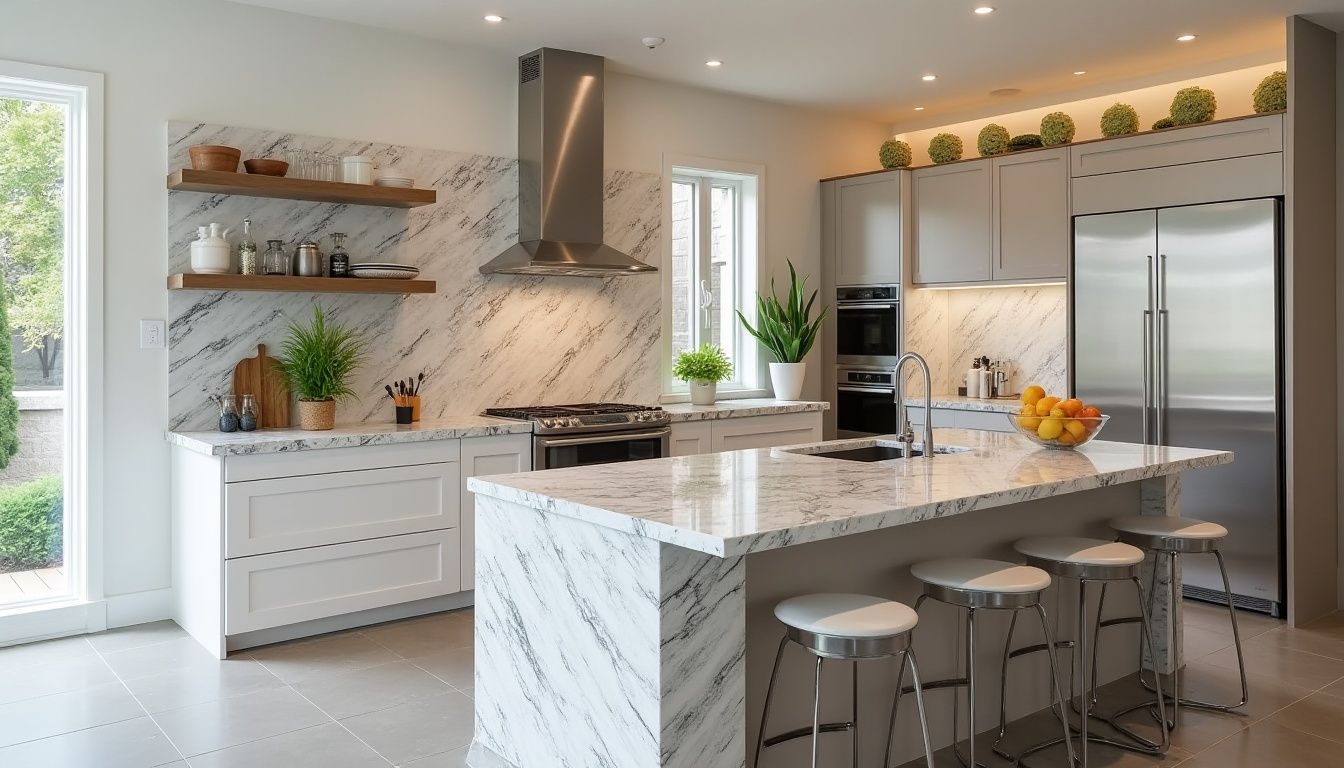
The next two to three years will see a radical expansion of the silica-free category, with technologies that move beyond simple mineral replacement and into the realm of synthetic biology and advanced material engineering.
BioQuartz® by Breton: How Amorphous Silica Changes the Safety Equation
BioQuartz®, developed by Breton S.p.A., is poised to be a major market disruptor. This material is not quartz in the traditional sense; it is a synthetic mineral created by heating ordinary sand to extreme temperatures.²⁷ This pyrolytic fusion transforms the crystalline silica into an amorphous structure.²
Amorphous silica is considered much safer because the human body can clear these particles more effectively than the inflammatory crystalline form.² From an aesthetic standpoint, BioQuartz® offers "800 dpi resolution," providing enormous depth and authenticity in "flow-through" patterns.²⁷
Radical Surfaces has silica-free lab-grown engineered stone in their product roadmap for 2027. It will incorporate BioQuartz® and the latest Breton technologies, and manufactured in the US at their facility in Texas.
Revolux ZERO: Recycled Glass Surfaces with 5D Nano-INK Technology
Revolux ZERO is another high-tech alternative entering the 2026 market. It is composed of nearly 80% recycled glass and utilizes "5D Nano-INK" technology to create 3D visual depth.² More impressively, it integrates "NEOS" technology, which repels substances from pH 1 to pH 13, making it nearly immune to chemical staining and acid etching.²
Bio-Based Resins and Carbon-Neutral Surfaces: What's Coming
Current research is moving toward the complete replacement of petroleum-derived binders with bio-based resins.³⁸
Sustainable Space Tech: Projects sponsored by the European Space Agency (ESA) are developing 100% bio-based epoxy resins derived from industrial waste and vegetable oils like soybean and linseed.³⁹
Carbon Neutral Collections: Brands like MILE®stone are debuting collections like Terrazzo Allure™ and Daydream™ that are officially certified as carbon-neutral, targeting the growing segment of "eco-luxury" consumers.⁴¹
Technology | Origin/Brand | Status | Impact on Distribution |
|---|---|---|---|
Amorphous Fusion | BioQuartz (Breton) | 2024 Launch | Eliminates silicosis risk; extreme pattern resolution.²⁷ |
5D Nano-INK | Revolux ZERO | 2026 Outlook | "Indistinguishable" from natural marble.² |
Plant-Based Resins | Cosmolite (Stone Italiana) | Available | Reduces petroleum dependence; high eco-appeal.²¹ |
Recycled Concrete Aggregates | Holcim ECOCycle | 2026 Pilots | "Circular" ecosystem for building materials.⁴² |
Liquid Linoleum | Biobased Flooring | 2026 Emerging | New category of seamless, fluid-applied surfaces.⁴³ |
AI Tools for Surface Distribution: Lot Consistency and Client Personalization
By 2026, the digital representation of surfaces will be as important as the physical slab. AI-driven production is already reducing batch color deviations to nearly zero, ensuring that distributors can fulfill large orders without worrying about "lot matching" issues.⁴⁴
AI Quality Assurance: Modern factories use AI to detect microscopic surface defects that the human eye might miss, ensuring that "launch-day flawless" appearance for the lifetime of the installation.³¹
Digital Integration: Distributors will increasingly use AI to analyze vast amounts of design data, helping clients identify color palettes and material combinations that resonate with specific regional preferences, such as the preference for "matte gold lighting" in Salt Lake City or "toe-kick quartz lighting" in Provo.²⁸
How to Phase Out High-Silica Quartz and Build a Silica-Free Inventory
Distributors should view their inventory not just as stone but as a "Risk-Agnostic Asset Portfolio."
Phase-Out Legacy Quartz: Proactively reduce orders of high-silica quartz to avoid being left with "stranded assets" as regulations tighten.²
Diversify Across Categories: Ensure a balanced mix of "Category 1" Mineral Surfaces (like ICON), Sintered Stones (like Lapitec), and premium Porcelain.²
Invest in "Jumbo" Formats: For silica-free materials, larger slabs (3200mm x 1600mm) are a meaningful specification for large kitchens, as they reduce the number of seams and maximize the visual impact of the pattern.¹²
Why Silica-Free Is the New Standard for Surface Distribution
The transition to silica-free countertops is a positive turning point for the industry, prioritizing worker health without sacrificing the beauty or functionality that defines luxury home design.³ For distributors, this evolution requires a commitment to continuous education and an investment in the "sensory experience" of the showroom.²³
By mastering the technical distinctions between amorphous and crystalline structures, and by leveraging advanced lighting and display techniques, distributors can position themselves as the trusted experts in this new, sustainable era of surfacing.² The "future of designer stone" is already here, and it is a future where safety and style are inextricably linked.⁷
Strategic Takeaway
Distributors who transition early to silica-free positioning will capture disproportionate market share as regulation accelerates globally. The window to differentiate on expertise and inventory depth is open now—but it closes as the category matures and every distributor catches up.
The showroom, the sales narrative, and the product mix are the three levers. Distributors who master all three—displaying silica-free materials properly, training staff to sell the health and performance story, and building inventory that reflects where the market is going—will own the category in their markets.
Call to Action
Audit your current inventory for high-silica quartz exposure and identify which SKUs carry the most regulatory risk
Upgrade showroom displays to feature CSF mineral surfaces, sintered stone, and recycled glass as the primary offering
Train sales teams on the regulatory timeline, the health narrative, and the performance objection responses in this guide
Align your product mix with the four emerging material categories: CSF Mineral, Sintered Stone, Recycled Glass, and Bio-Based surfaces
Schedule a showroom lighting audit to ensure silica-free materials are displayed at their best under appropriate color temperatures
Disclaimer: Silica Free News is an independent publication covering silica-free and low-silica surface materials for distributors, architects, interior designers, and other industry professionals in the United States and Canada. Our content is provided for general informational purposes only and does not constitute legal, regulatory, technical, engineering, health and safety, or professional specification advice.
Although we make reasonable efforts to provide accurate and current information, product specifications, compositions, certifications, availability, and regulatory requirements may change. Readers should verify all material information directly with the manufacturer and consult the applicable legal, regulatory, or governmental authority before specifying, purchasing, fabricating, or installing any product.
References
Why Low-Silica Quartz Surfaces Matter in 2026, accessed April 15, 2026, https://www.pacific-surfaces.com/post/why-low-silica-quartz-surfaces-matter-in-2026
Silica-Free Countertop Options 2026: Complete Guide to Engineered Stone + Alternatives, accessed April 15, 2026, https://silicafreenews.com/p/silica-free-countertop-options-2026-complete-guide-to-engineered-stone-alternatives
Why is There an Engineered Stone Ban in Australia - Dayjob Recruitment, accessed April 15, 2026, https://www.dayjob.com.au/engineered-stone-ban-australia/
Understanding the engineered stone ban - Department of Employment and Workplace Relations, Australian Government, accessed April 15, 2026, https://www.dewr.gov.au/engineeredstone/understanding-engineered-stone-ban
Crystaline Silica Free Surfaces | Caesarstone Australia, accessed April 15, 2026, https://www.caesarstone.com.au/crystaline-silica-free/
Caesarstone - Wikipedia, accessed April 15, 2026, https://en.wikipedia.org/wiki/Caesarstone
From Engineered Stone to Zero Silica: A New Era of Safe and Sustainable Stone, accessed April 15, 2026, https://www.genstone.com.au/blog/Safe-and-Sustainable-Stone-in-Australia.html
Engineered stone ban - Silica - Safe Work Australia, accessed April 15, 2026, https://www.safeworkaustralia.gov.au/safety-topic/hazards/silica/engineered-stone-ban
Mineral Surfaces | Caesarstone Australia, accessed April 15, 2026, https://www.caesarstone.com.au/surface-evolution/
Top 10 Global Quartz Stone Brands – Ranking & Analysis, accessed April 15, 2026, https://www.fasastone.com/article-5676089068307930.html
Low-Silica Quartz vs Traditional Quartz - Luxquartzvietnam, accessed April 15, 2026, https://luxquartzvietnam.com/en/low-silica-quartz-vs-traditional-quartz/
Low Silica Quartz 2026: The Complete Guide to Q10 vs Q40 Standards, accessed April 15, 2026, https://silicafreenews.com/p/low-silica-quartz-2026-the-complete-guide-to-q10-vs-q40-standards
Zero-Silica Quartz vs. Traditional Quartz - Colt Architectural Finishes, accessed April 15, 2026, https://coltaf.com/2025/06/18/zero-silica-quartz-vs-traditional-quartz/
Zero-Silica vs. Traditional Quartz: Which Surface Is Right for You - Summerly, accessed April 15, 2026, https://www.summerlyquartzstone.com/article/zero-silica-vs-traditional-quartz-which-surface-is-right-for-you.html
Low Silica Quartz Worktops vs. Traditional Quartz: What's the Difference? | Chandler Stoneworks, accessed April 15, 2026, https://chandlerstoneworks.co.uk/blog/low-silica-quartz-worktops-vs-traditional-quartz-whats-the-difference/
Cosentino Previews First Zero Silica Surface, New Innovations & Diverse Applications Across Silestone, Dekton, and Sensa at KBIS 2025, accessed April 15, 2026, https://www.cosentino.com/usa/blog/cosentino-previews-first-zero-silica-surface-new-innovations-diverse-applications-across-silestone-dekton-and-sensa-at-kbis-2025/
Lapitec - APT - Architectural Products and Technologies, accessed April 15, 2026, https://www.aptinnovation.co.nz/lapitec/
Best Kitchen Countertop Materials for 2026 | Caesarstone US, accessed April 15, 2026, https://www.caesarstoneus.com/blog/best-kitchen-countertop-materials-for-2026/
Cosentino launches new Éclos mineral surfaces - KBBFocus, accessed April 15, 2026, https://kbbfocus.com/news/5574-cosentino-launches-new-eclos-mineral-surfaces-with-zero-crystalline-silica
Zero Silica Collection 2025 - New Stone Factory, accessed April 15, 2026, https://vietnamprintedquartz.com/zero-silica-collection-2025/
Cosmolite Collection | OSHA Safe & Silica-Free | EuroStone - Zero Silica Quartz Countertops, accessed April 15, 2026, https://eurostonequartzcountertops.com/cosmolite-collection
Cosmolite 100% Recycled Low Silica - Stone Italiana, accessed April 15, 2026, https://www.stoneitaliana.com.au/collections/cosmolite-collection/
Slabs In Design - Artistic Tile, accessed April 15, 2026, https://www.artistictile.com/blogs/artisticdigest/slabs-in-design
Alpha Zero Surfaces: Zero Surfaces Home, accessed April 15, 2026, https://alphazerosurfaces.com.au/
Granite Countertops and Lighting: How Natural and Artificial Light Affect Color and Texture, accessed April 15, 2026, https://granexindustries.com/granite-countertops-and-lighting-how-natural-and-artificial-light-affect-color-and-texture/
2026 Natural Stone Design Trends and Architecture - Duramica.com, accessed April 15, 2026, https://www.duramica.com/post/natural-stone-unique-design-solutions
Silica Free Quartz Countertops - Silica Free Engineered Stone, accessed April 15, 2026, https://largo.floridaquartzstone.com/consumers.html
Creative Lighting Ideas for Granite & Quartz Countertops, accessed April 15, 2026, https://www.creativegranite.com/creative-lighting-ideas-granite-quartz-countertops/
Stone and Lighting: How Different Surfaces React to Natural and Artificial Light, accessed April 15, 2026, https://www.stoneworx.com/blog/stone-and-lighting-how-different-surfaces-react-to-natural-and-artificial-light
The Role of Lighting in Countertop Selection - Design Miter Tile, accessed April 15, 2026, https://designmitertile.com/the-role-of-lighting-in-countertop-selection/
Retail Counters with Premium Surface Finishes: What to Know - Kainan Display, accessed April 15, 2026, https://www.kndisplay.com/Key-Considerations-for-Selecting-Retail-Counters-with-Excellent-Surface-Finishing
How to Create a Mood Board - Marvin Windows, accessed April 15, 2026, https://www.marvin.com/blog/how-to-create-a-mood-board
Why Every Surface Designer Should Use a Moodboard - Hollei Anne Design Co., accessed April 15, 2026, http://holleiannedesignco.com/blog/2025/1/15/why-every-surface-designer-should-use-a-moodboard
The Role of a Mood Board in Workspace Design | OP Group - Office Principles, accessed April 15, 2026, https://officeprinciples.com/insights/the-role-of-the-mood-board
Natural Stone Trends 2026: Curves & Contrast - Brachot, accessed April 15, 2026, https://www.brachot.com/en/brachot-academy/trends-2026/
Understanding the Differences Between Zero Silica Quartz and Regular Quartz Stone, accessed April 15, 2026, https://www.goldtopquartz.com/article/understanding-the-differences-between-zero-silica-quartz-and-regular-quartz-stone.html
Proven Sales Script Examples to Enhance Customer Engagement - Gong, accessed April 15, 2026, https://www.gong.io/blog/sales-script-examples
Alkyd resins produced from bio-based resources - PMC, accessed April 15, 2026, https://pmc.ncbi.nlm.nih.gov/articles/PMC10507036/
Boosting sustainability with biobased resins composites for space applications - ESA, accessed April 15, 2026, https://www.esa.int/Enabling_Support/Preparing_for_the_Future/Discovery_and_Preparation/Boosting_sustainability_with_biobased_resins_composites_for_space_applications
Sustainable Bio-Based Epoxy Resins with Tunable Thermal and Mechanic Properties - MDPI, accessed April 15, 2026, https://www.mdpi.com/2073-4360/15/20/4180
MILE®stone debuts 2026 collections - TileLetter, accessed April 15, 2026, https://www.tileletter.com/milestone-debuts-2026-collections-offering-bold-expression-serenity-and-balance-creative-inspiration-and-carbon-neutrality/
5 construction innovations to watch in 2026 - Holcim, accessed April 15, 2026, https://www.holcim.com/who-we-are/our-stories/construction-innovations-in-2026
12+ updates and additions to kick off 2026 - Habitable's Informed, accessed April 15, 2026, https://informed.habitablefuture.org/resources/news/149-12-updates-and-additions-to-kick-off-2026
Flooring Industry Enters a New Era of Material Innovation and Smart Solutions in 2026, accessed April 15, 2026, https://www.proluxefloor.com/Flooring-Industry-Enters-a-New-Era-of-Material-Innovation-and-Smart-Solutions-in-2026-id43114975.html
Natural Stone Distributor in USA, Marble and Granite Supply, accessed April 15, 2026, https://stonewarehouseusa.com/