- Silica Free News
- Posts
- Soapstone Countertops: The Naturally Silica-Free Stone for Residential and Commercial Projects
Soapstone Countertops: The Naturally Silica-Free Stone for Residential and Commercial Projects
Beyond the Soapstone vs Quartz Comparison
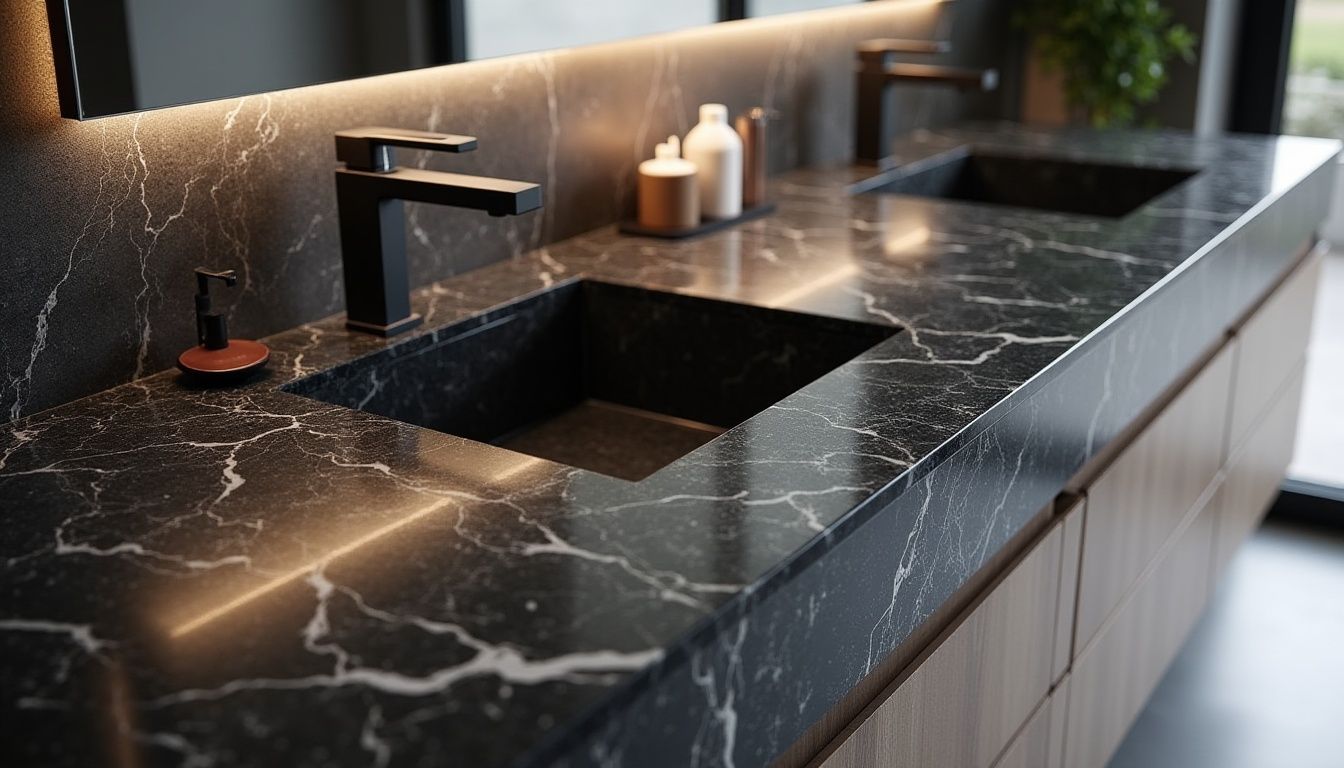
The specification of architectural surfacing materials has entered a paradigm shift where mineralogical composition is weighed with the same gravity as aesthetic appeal.
For architects, designers, and distributors, the emergence of soapstone as a primary alternative to engineered quartz and traditional igneous stones represents a return to geological authenticity.
This metamorphic rock, characterized by its high talc content and dense mineral matrix, offers a unique value proposition: it is inherently free of crystalline silica while providing thermal and chemical performance metrics that exceed those of most synthetic or natural competitors. This article provides a technical analysis of soapstone, detailing its geological formation, physical and chemical properties, and the multi-dimensional benefits it offers to modern residential and commercial projects.
The Mineralogical Foundation of Soapstone
To understand why soapstone is uniquely positioned as a silica-free alternative, one must examine the specific metamorphic processes that govern its formation.
Soapstone, or steatite, is a metamorphic rock formed through the hydrothermal alteration of ultramafic rocks or the carbonatization of magnesium-rich precursors. This process, often occurring in tectonic zones of high deformation, results in a mineral assembly that is fundamentally different from the quartz-rich matrices of granite or engineered stone.1
Crystalline Silica vs. Bound Silicates
The core distinction between soapstone and other surfacing materials lies in the state of its silicon dioxide (Si02) content. In engineered stones, which may contain 90% to 97% crystalline silica, the quartz particles are held in a resin binder.
Granite, a natural igneous rock, typically contains between 20% and 45% crystalline silica.3 In contrast, while chemical analysis of soapstone reveals high percentages of (Si02) this silica is not "free" or crystalline. Instead, it is chemically bound within the mineral structure of talc, a hydrated magnesium silicate.1
This geological distinction is of paramount importance for the architectural specification process. Because the silica is part of the talc mineral lattice, the material is geologically classified as crystalline silica-free for the purposes of mineralogical characterization.4 This inherent property allows designers to specify a natural stone that circumvents the crystalline quartz concerns associated with the modern surfacing industry without relying on proprietary "advanced fusion" resins or synthetic binders.4
Architectural Grade vs. Artistic Grade
Distinguishing between architectural and artistic grades of soapstone is essential for ensuring structural integrity in commercial and residential installations. The primary differentiator is the talc concentration, which inversely dictates the material's hardness on the Mohs scale.
Property | Artistic Grade Soapstone | Architectural Grade Soapstone |
Talc Content | 75% – 90%+ | 30% – 50% |
Mohs Hardness | 1.0 – 2.0 | 2.5 – 3.5 |
Common Uses | Sculpture, carving, small artifacts | Countertops, sinks, fireplaces, flooring |
Mineral Matrix | Predominantly talc | Talc, magnesite, chlorite, dolomite |
Architectural soapstone leverages a balance of talc (providing thermal and chemical resistance) and harder minerals like magnesite and chlorite (providing structural durability and impact resistance).2 This composition ensures that while the stone remains workable for fabricators, it possesses the "resistance to pressure" necessary for heavy-duty commercial applications.5

The Low Silica / No Silica Cheat Sheet
The 2026 Countertop Silica Classification Guide breaks down what each classification actually means, where the Q-rating system applies, and which brands fall where — so you can specify or stock with confidence.
Chemical Composition and Elemental Stability
The chemical profile of soapstone is remarkably consistent across different geographic sources, though minor variations in oxide percentages can influence the stone's color and thermal shock resistance. X-ray fluorescence (XRF) analysis identifies magnesium oxide and silicon dioxide as the dominant components, reflecting the dominance of the talc mineral.1
Elemental Analysis of Soapstone Varieties
Research comparing soapstone from different geo-tectonic settings, such as Craton (CS) and Usagaran (US) regions, highlights how subtle shifts in elemental composition dictate physical properties. For instance, soapstone from the Usagaran belt often shows a higher concentration of iron(III) oxide, which has been linked to increased thermal shock resistance and a potential hardening of the rock surface when exposed to high temperatures.1
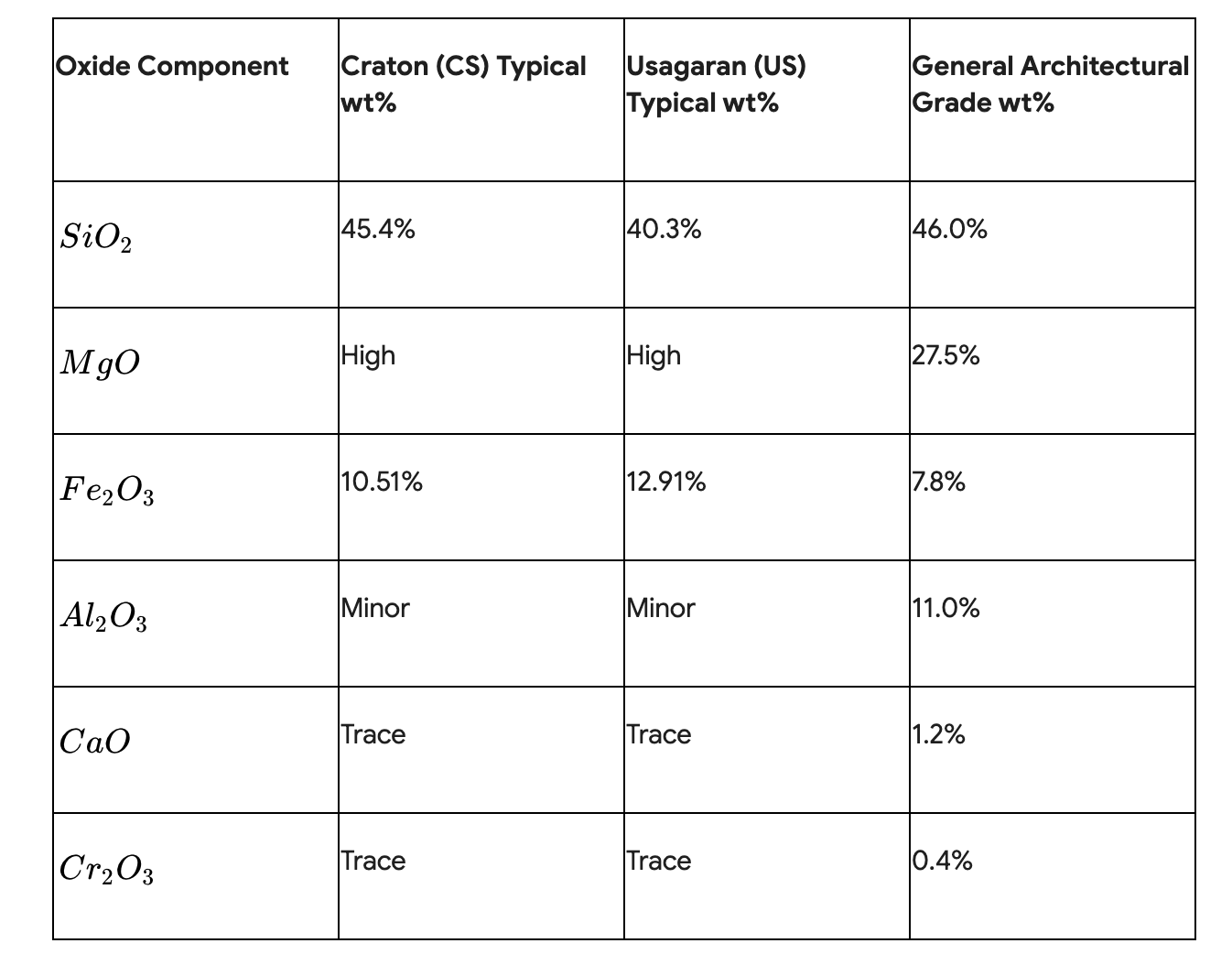
The presence of chlorite (5% - 10%) is often the primary driver of the green hues found in many soapstone slabs, while magnetite and hematite inclusions contribute to the darker charcoal and black tones.5 These minerals are chemically inert and stable under a wide range of environmental conditions, ensuring that the stone does not degrade when exposed to the harsh cleaners or chemicals found in commercial kitchens or medical laboratories.6
Thermal Stability and Decomposition
Soapstone exhibits exceptional stability under thermal stress, a property quantified through thermogravimetric analysis (TGA). While many stones experience significant weight loss due to the dehydration of minerals or the decomposition of carbonates at relatively low temperatures, soapstone remains largely unchanged.
Studies have shown weight loss as low as 0.75% at temperatures approaching 980°C.1 This thermal resilience is the result of the high melting temperature of the stone, which is approximately 1,500°C (2,735°F).5 This makes soapstone one of the few natural materials capable of sustaining direct contact with open flames and high-temperature industrial processes without structural failure.
Physical and Mechanical Performance Metrics
The performance of soapstone in high-traffic commercial environments and active residential kitchens is defined by its density and non-porous nature. Despite being a "softer" stone in terms of scratch resistance, its overall mechanical profile is one of extreme durability.
Density and Non-Porosity
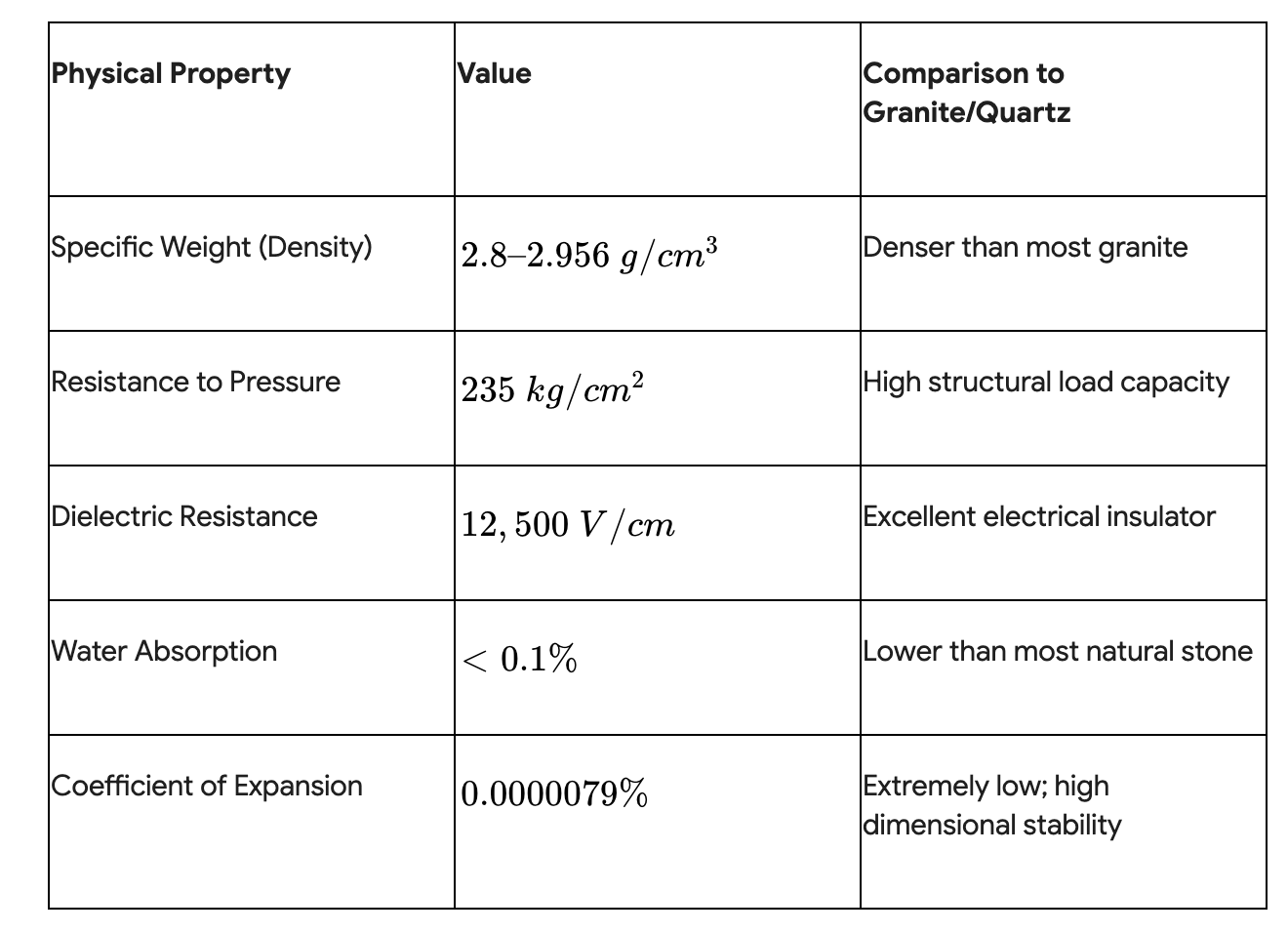
Soapstone is exceptionally dense, with a specific gravity typically ranging from 2.8 to 2.956 g/cm3.4 This density is significantly higher than that of many granites and nearly all engineered stones. The compaction of mineral particles is so thorough that the stone is naturally non-porous, with a water absorption rate of approximately 0.1% or less.1
The architectural implications of this non-porosity include:
Stain Resistance: Because liquids cannot penetrate the surface, soapstone is virtually impervious to staining from common kitchen agents like red wine, coffee, or beet juice.6
Hygienic Integrity: The lack of pores prevents the harbor of odor-causing mold, mildew, and bacteria, meeting the stringent hygiene requirements of NSF/ANSI Standard 51 for food preparation areas.8
Chemical Inertness: The stone does not react with acids or bases, meaning it will not etch when exposed to lemon juice or vinegar—a major failure point for marble and limestone.7
Hardness, Ductility, and Impact Resistance
Soapstone's Mohs hardness (2.5 - 3.5) is often cited as a concern, yet it is this very property that provides the stone's unique durability.4 Unlike harder materials like granite or quartz, which are brittle and prone to chipping or shattering under impact, soapstone possesses a degree of ductility. Under the stress of a heavy dropped object, soapstone is more likely to dent or scratch than to crack.4
This "softness" also translates to on-site workability. Fabricators and even end-users can remove surface scratches using fine-grit sandpaper, effectively "resetting" the finish.4 This repairability is a critical commercial benefit, particularly in rental properties or high-volume hospitality settings where surface damage is inevitable.
Thermal Dynamics and Energy Storage
Soapstone’s thermal properties are perhaps its most celebrated characteristic among architects and energy consultants. It has a high caloric conductivity and a remarkable ability to store and slowly release heat, a phenomenon known as thermal mass.
Caloric Conductivity and Specific Heat
The material possesses a caloric conductivity of 2.6 kilocalories per hour per meter per degree Celsius and a specific heat of 0.26 kilocalories per kilogram per degree Celsius.5
In practical terms, this allows the stone to absorb heat from a source (such as a stove or a fireplace fire) and distribute it evenly across its mass. This is why a soapstone countertop feels warm to the touch long after a hot pan has been removed, and why soapstone masonry heaters are among the most efficient wood-burning heating solutions available.5
The Physics of Delta T
In the context of masonry heaters and heated commercial surfaces, "Delta T" refers to the difference between the stone's surface temperature and the ambient room temperature.5 Soapstone heaters operate with an average surface temperature of 170° F, resulting in a Delta T of approximately 100. This is significantly more comfortable and safer than cast iron stoves, which can reach surface temperatures of 400°.5
The operation of soapstone under thermal load follows three distinct phases:
Warm-up Phase: The surface temperature rises from 130°F
to 170°F as the stone absorbs the core's heat.5
Equilibrium Phase: The stone maintains a nearly constant 170°F
surface temperature, radiating heat into the space through electromagnetic waves (radiant heat) rather than convection.5
Cool-down Phase: The temperature declines gradually over 12 to 21 hours, providing consistent warmth long after the fuel source is extinguished.5
For designers of high-end residential estates or boutique hotels, this property allows for the integration of soapstone into sustainable heating strategies that emphasize comfort and health. Radiant heat from soapstone does not dry out the air or circulate dust and allergens like forced-air systems do, making it a preferred choice for healthful indoor environments.5
Laboratory Specification and Industrial Performance
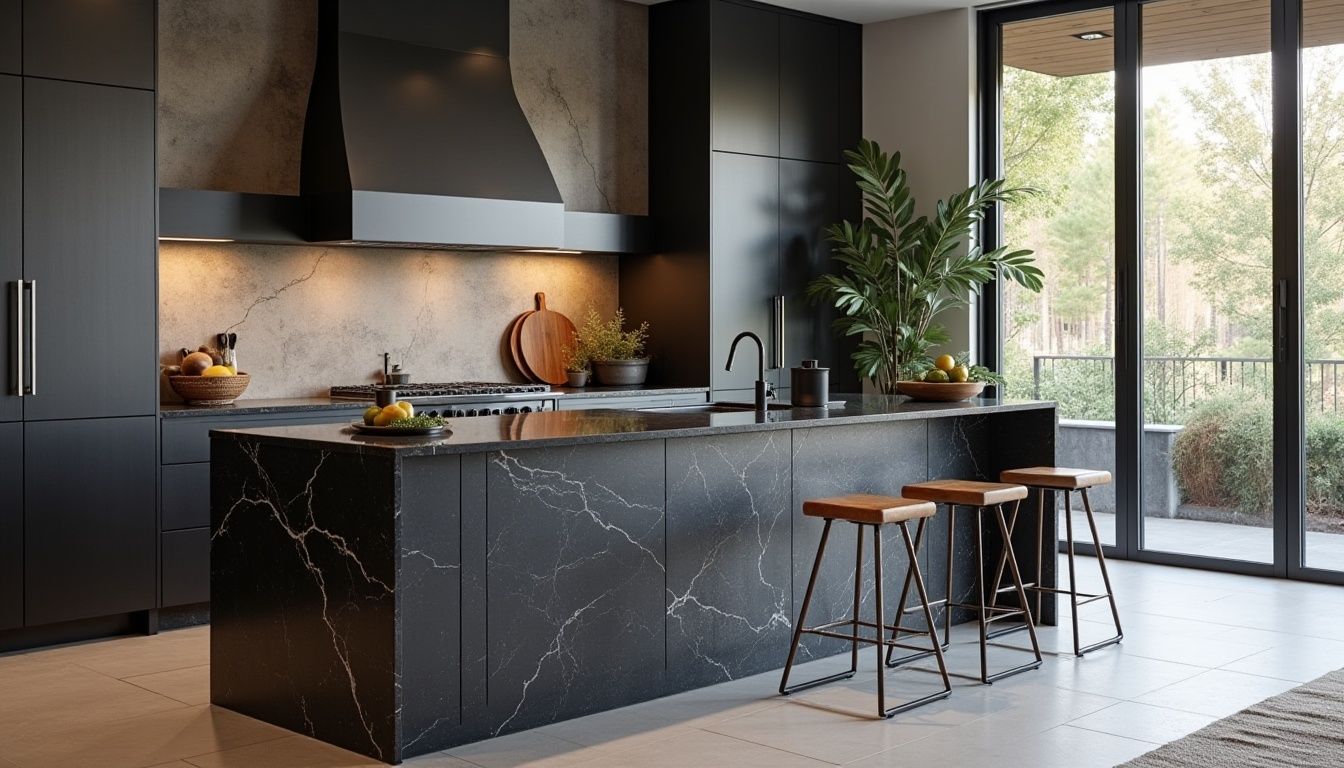
The history of soapstone as the "gold standard" for laboratory countertops is rooted in its absolute chemical resistance. In environments where exposure to corrosive agents is a daily occurrence, the mineralogical stability of soapstone is unmatched.
ASTM Standards and Chemical Resistance
Soapstone consistently meets or exceeds the requirements of ASTM C1525 for chemical resistance. Unlike epoxy resin, which can be damaged by high heat, or stainless steel, which can be dented and corroded by certain salts and acids, soapstone maintains its integrity.7
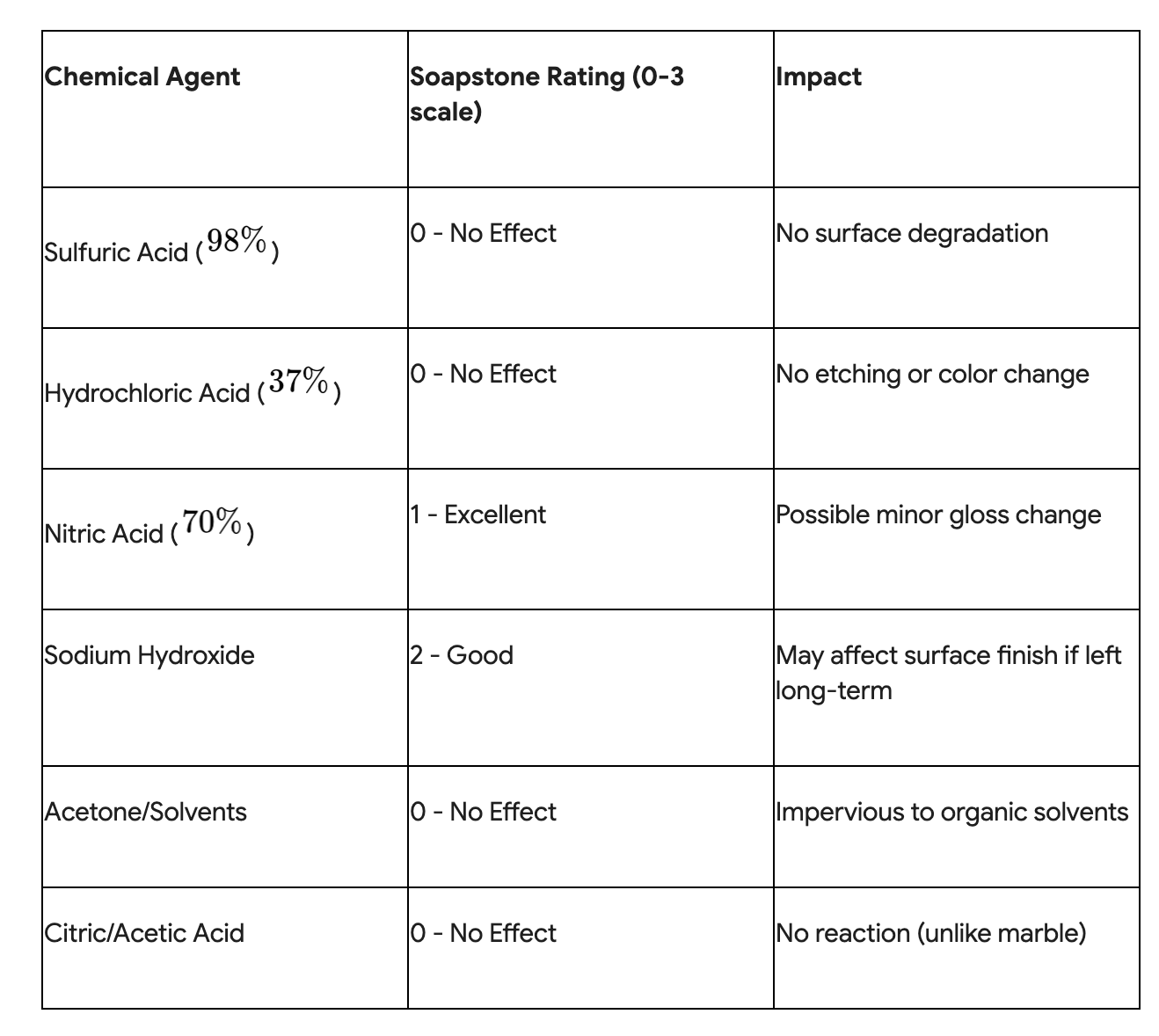
Note: Rating 0 indicates no detectable change; Rating 3 indicates objectionable discoloration or deterioration.10
Workability in Industrial Settings
In commercial laboratory design, the ability to customize work surfaces is paramount. Soapstone slabs are typically available in 2cm and 3cm thicknesses, which can be easily routed to include marine edges (to contain spills) or integrated sinks.8 Because the stone is worked with standard carbide tools, the cost of custom fabrication is often lower than that of high-end synthetic laboratory tops, while providing a vastly longer service life.4
Aesthetic Versatility and Sourcing Logistics
For designers, soapstone offers a "living" aesthetic that evolves with the life of the project. It provides a tactile, matte finish that is distinct from the high-gloss, artificial appearance of polished granite or quartz.
Global Quarrying and Variety Profiles
While soapstone is found globally, architectural-grade slabs are primarily sourced from Brazil, the United States (Virginia), Finland, and India.2 Brazil remains the dominant supplier for North American markets, with fewer than ten active quarries producing the majority of architectural material.2
Brazilian Soapstone: Often features high-contrast veining. Varieties like Spider Soapstone offer dramatic green veining, while Brazilian Black provides a classic dark gray to ivory contrast.13
American Soapstone (Alberene): Quarried in Virginia, this variety is known for its extreme density and dark, uniform color once oiled. It has a long history in American architecture, particularly for academic and institutional buildings.14
Indian Soapstone: Varieties like Indigo often show a dappled, dark green and gray surface with unique mineral patterning.12
Surface Treatment: The Role of Oil and Wax
The visual transformation of soapstone is one of its most unique design features. In its natural, untreated state, soapstone is a soft, muted gray.13 However, the application of food-grade mineral oil or soapstone wax dramatically darkens the stone to a deep charcoal or black, making the white and green veining "pop".13
Distributors often recommend this treatment not for protection—as the stone is already non-porous—but for aesthetic consistency. Untreated soapstone will naturally darken in areas where it comes into contact with oils from hands or food, creating an uneven patina. Applying oil or wax ensures a uniform, dark finish from day one.8
Finish Type | Visual Appearance | Maintenance Requirement |
Natural (Untreated) | Light gray, muted, matte | Occasional cleaning; will patina over time |
Mineral Oiled | Deep black, high contrast | Periodic re-application to maintain darkness |
Waxed | Dark black, satin sheen | Longer lasting than oil; less frequent application |
Honed | Standard matte texture | Primary finish for all soapstone |
Commercial Benefits and Return on Investment (ROI)
For commercial developers and distributors, soapstone is a "high-end" material that justifies its price through longevity and reduced maintenance costs. While the initial cost per square foot can be higher than mid-range granite, the life cycle costs are significantly lower.8
Longevity and Architectural Salvage
Because soapstone is chemically inert and thermally stable, it does not "age" in the traditional sense of degradation. Instead, it patinas. This durability is so high that original soapstone sinks and countertops are frequently found in architectural salvage stores, often selling for prices comparable to new material.2
For a commercial project, this means the surface will likely never need to be replaced for the duration of the building's life, even under the stress of restaurant or laboratory use.8
Fabricator Efficiency
For distributors, the workability of soapstone is a major selling point. Fabricators can cut and shape soapstone using standard woodworking tools, which reduces the need for expensive water-jet or specialized CNC machinery.4
This leads to faster turnaround times for custom projects and allows for the creation of complex, integrated details (such as carved drainboards or custom apron-front sinks) that would be prohibitively expensive in other materials.8
Case Studies in Modern Architecture
Soapstone's resurgence is evidenced by its inclusion in high-profile modern projects that prioritize material honesty and sustainability.
Residential Feature: The Single-Slab Fireplace
Designer Kirsten Grove utilized Alberene Soapstone to create a modern fireplace that serves as both a visual anchor and a functional heat source.15 By using a single-slab "picture frame" design, the project achieved a seamless, minimalist aesthetic that avoided the grout lines and seams typical of tile or multi-piece stone surrounds. The inherent thermal mass of the soapstone ensures the fireplace continues to radiate heat long after the fire has dimmed, grounding the room in both temperature and design.15
Hospitality and Public Spaces
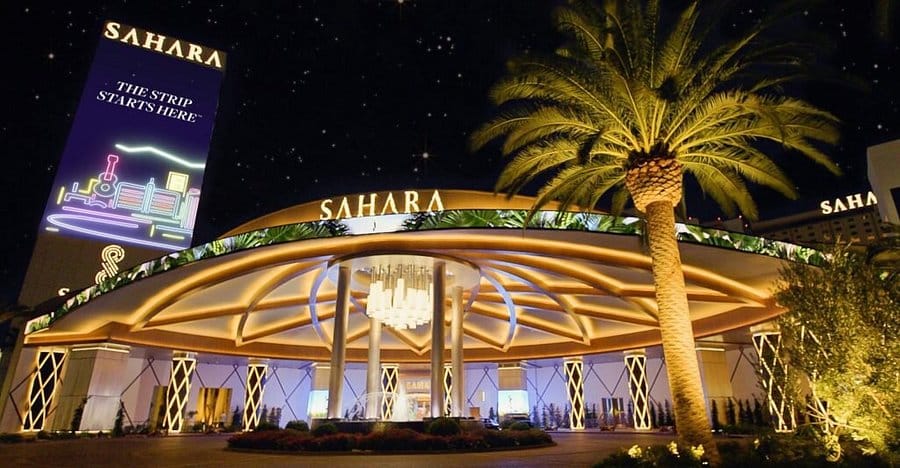
In commercial hospitality, the use of soapstone in areas like the Melbourne Orlando International Airport or the Sahara Las Vegas Hotel & Casino highlights the material's ability to withstand high-traffic environments while providing a luxury feel.18 In these settings, the material's slip resistance (when used in flooring or stair treads) and its tactile warmth are valued as much as its visual appeal.
Environmental and Sustainability Considerations
As the building industry moves toward low-carbon and healthy material specifications, soapstone offers several key advantages.
VOCs and Indoor Air Quality
Because soapstone is naturally non-porous and requires no chemical sealants, it contributes to excellent indoor air quality. Many synthetic surfacing materials and even some natural stones require the application of solvent-based sealers that can off-gas volatile organic compounds (VOCs). Soapstone is typically treated only with food-grade mineral oil, ensuring that the installation remains safe for schools, healthcare facilities, and residential kitchens.8
Recycled Content vs. Natural Origin
While materials like IceStone emphasize their high recycled glass content (75%), soapstone represents the pinnacle of natural, low-intervention sourcing.4 It is a quarried product that requires minimal processing compared to the energy-intensive manufacturing of engineered stone or "advanced fusion" surfaces. Its long service life and recyclability further enhance its sustainability profile, as it can be easily repurposed at the end of a building's life.2
Technical Synthesis for Specification Professionals
Architects and designers should consider soapstone when a project requires a combination of the following criteria:
A Silica-Free Mandate: Where mineralogical integrity is a primary driver.
Extreme Heat Exposure: In kitchens, laboratories, or around heating elements.
Corrosive Environments: Where exposure to acids or household chemicals is expected.
Aesthetic Authenticity: Where a natural patina and tactile finish are desired over synthetic uniformity.
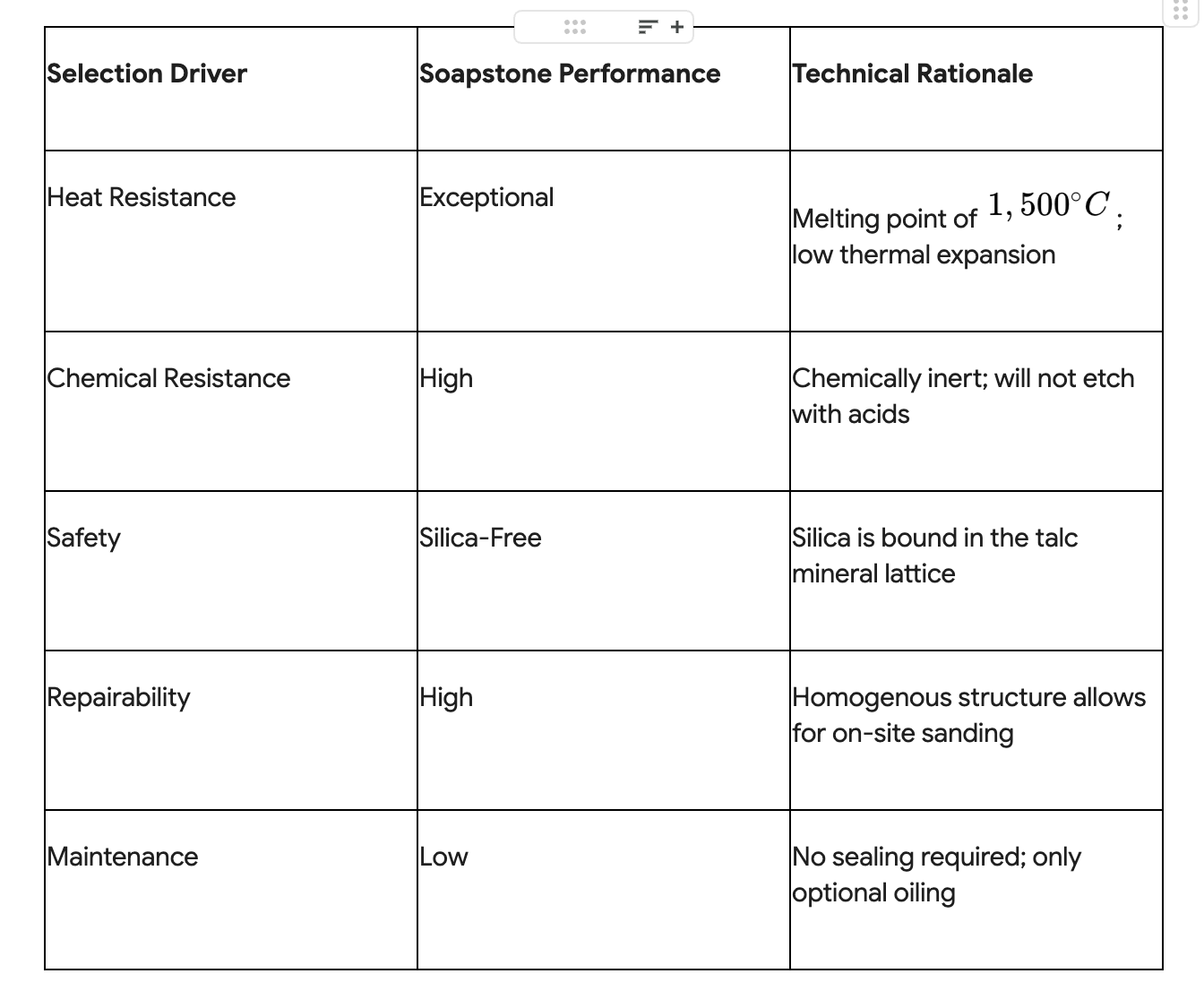
Soapstone is not merely an aesthetic choice but a technical solution for some of the most demanding challenges in modern architecture. Its unique combination of chemical inertness, thermal mass, and silica-free composition ensures that it remains a premier choice for architects, designers, and distributors who prioritize long-term performance and material honesty. Whether utilized in a high-volume commercial kitchen, a university research lab, or a bespoke residential fireplace, soapstone provides a level of functional beauty that is unmatched by synthetic alternatives.
Disclaimer: Silica Free News is an independent publication covering silica-free and low-silica surface materials for distributors, architects, interior designers, and other industry professionals in the United States and Canada. Our content is provided for general informational purposes only and does not constitute legal, regulatory, technical, engineering, health and safety, or professional specification advice.
Although we make reasonable efforts to provide accurate and current information, product specifications, compositions, certifications, availability, and regulatory requirements may change. Readers should verify all material information directly with the manufacturer and consult the applicable legal, regulatory, or governmental authority before specifying, purchasing, fabricating, or installing any product.
Sources:
Experimental Investigation of Soapstone and Granite Rocks as ..., accessed May 5, 2026, https://pubs.acs.org/doi/10.1021/acsomega.3c00314
What is Soapstone? | M Teixeira Soapstone, accessed May 5, 2026, https://www.soapstones.com/what-is-soapstone/
Engineered Stone Countertops - CCOHS, accessed May 5, 2026, https://www.ccohs.ca/oshanswers/chemicals/engineered-stone-countertops.html
Caesarstone ICON vs IceStone vs Soapstone - A Comparison, accessed May 5, 2026, https://silicafreenews.com/p/caesarstone-icon-vs-icestone-vs-soapstone
Soapstone Data | Greenstone Soapstone Masonry Heaters, accessed May 5, 2026, https://www.greenstoneheat.com/soapstone-data/
Natural Stone ⋆ Granite ⋆ Quartz ⋆ Solid Surface ⋆ Countertops, accessed May 5, 2026, https://www.a1qualitystone.com/natural-stone/
Guide To Lab Countertops - DECO Associates, accessed May 5, 2026, https://decoassociates.com/wp-content/uploads/2021/04/deco-guide-to-countertops-v11-2020-1.pdf.pdf
Kitchen Countertop Options: Soapstone, accessed May 5, 2026, https://www.hogandesignandconstruction.com/blog/kitchen-countertop-options-soapstone
ASTM Standards | EuroStone Quartz Test Results, accessed May 5, 2026, https://www.eurostonequartzcountertops.com/resources/astm-standards
Chemical Resistant Laboratory Grade Epoxy Resin Cast Work-surfaces - New England Lab, accessed May 5, 2026, https://www.newenglandlab.com/userfiles/files/resources/Product%20Brochures/AES/003_AES_Epoxy_Work_Surface_Brochure.pdf
Black Soapstone Countertops - MSI Surfaces, accessed May 5, 2026, https://www.msisurfaces.com/soapstone/black-soapstone/
Complete Guide for Soapstone Countertops | Arch City Granite, accessed May 5, 2026, https://www.archcitygranite.com/soapstone-countertops-a-complete-guide-by-arch-city-granite/
The Earthly Wonders of Soapstone - What Would You Like to Know?, accessed May 5, 2026, https://elemaroregon.com/blog/index.php/2021/06/04/the-earthly-wonders-of-soapstone/
Made in America: Stone Countertops Quarried in North America - Arch City Granite & Marble, accessed May 5, 2026, https://www.archcitygranite.com/made-in-america-stone-countertops-quarried-in-north-america/
Making a Statement: Designer Kirsten Grove's Timeless Soapstone Fireplace - Polycor Inc., accessed May 5, 2026, https://www.polycor.com/blog/benefits-of-a-soapstone-fireplace/
Help Me Decide - Should I Oil My Soapstone or Leave It Natural? - Home Glow Design, accessed May 5, 2026, https://www.homeglowdesign.com/2020/01/11/help-me-decide-should-i-oil-my-soapstone-or-leave-it-natural/
Advanced Architectural Stone: Case Studies, accessed May 5, 2026, https://advancedarchitecturalstone.com/case-studies/
Case Studies - Moz Designs | Architectural Products + Metals, accessed May 5, 2026, https://mozdesigns.com/portfolio/case-studies/