- Silica Free News
- Posts
- IceStone Recycled Glass Countertops: Complete Review for Architects and Designers
IceStone Recycled Glass Countertops: Complete Review for Architects and Designers
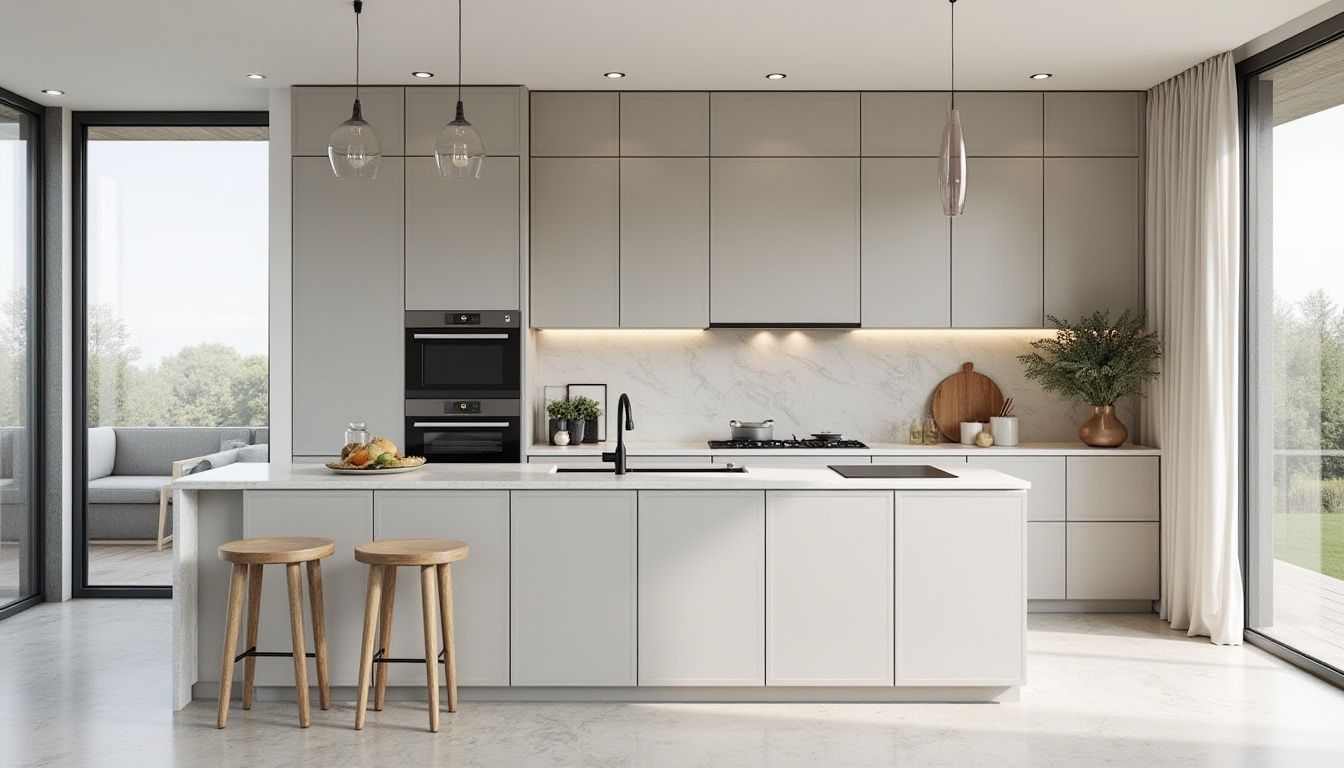
IceStone is a countertop surface made from three ingredients: 100% recycled glass, Portland cement, and non-toxic pigments. No resins. No petrochemicals. No crystalline silica.
That formula puts it in a category of its own among recycled glass surfaces. Where most engineered stone products are built around silica-rich quartz and petroleum-based resin binders, IceStone uses a cementitious system — and that choice has real implications for health certifications, LEED credits, fabrication requirements, and long-term maintenance.
This review covers IceStone's technical specifications, certifications, design options, and fabrication requirements. It also compares IceStone directly against the two other major recycled glass countertop brands serving North America: Vetrazzo and Curava.
What Is IceStone?
IceStone is a recycled glass composite surface manufactured in the United States. It was originally produced at the Brooklyn Navy Yard; production and shipping operations have since relocated to Georgia, which IceStone notes has optimized distribution for markets in the Southeast and Mid-Atlantic.
The product is built around a Portland cement binder — the same class of cementitious material used in concrete. Recycled glass constitutes 70% to 75% of the slab by weight. The glass feedstock is sourced from post-consumer and post-industrial streams, including container glass (bottles and jars) and industrial glass scraps.
The practical result is a surface that looks more like terrazzo than polished quartz. The recycled glass aggregate creates visual depth — variations in glass size, color distribution, and shade are inherent to the material, not defects. Each slab is unique.
The short version: IceStone is a cementitious glass composite, not an engineered quartz or a resin-based product. Its closest analogs are architectural concrete and terrazzo, not conventional countertop materials.
What this means for architects: the specification, maintenance, and fabrication requirements for IceStone are meaningfully different from quartz or granite. Planning around those differences upfront prevents installation problems later.

The Low Silica / No Silica Cheat Sheet
The 2026 Countertop Silica Classification Guide breaks down what each classification actually means, where the Q-rating system applies, and which brands fall where — so you can specify or stock with confidence.
Is IceStone Silica-Free?
The most important distinction between IceStone and traditional engineered stone is the type of silica present.
Traditional quartz-based engineered stone typically contains up to 90% crystalline silica. When cut or ground, crystalline silica generates fine respirable dust that can cause silicosis — an irreversible lung disease — in fabricators and installers.
IceStone contains amorphous silica in the form of recycled glass. Amorphous silica does not carry the same respiratory risk as crystalline silica. The material is free of crystalline silica and free of the resin binders that are associated with VOC emissions and endocrine-disrupting chemicals.
Worth noting: IceStone's silica-free status applies to the glass aggregate itself. The cement binder and pigments are the other ingredients. The product data identifies all three components as non-toxic, and the surface carries both a Health Product Declaration (HPD) and Cradle to Cradle Silver certification verifying material health.
What Are IceStone's ASTM Technical Specifications?
IceStone publishes ASTM performance data for its product. For architects documenting specifications or evaluating the material for demanding applications, here are the key figures drawn from IceStone's technical documentation:
Physical Property | ASTM Test Method | Performance Value |
|---|---|---|
Compressive Strength | ASTM C109 | 13,000 – 16,000 psi |
Flexural Strength | ASTM C293 / C203 | 890 psi |
Specific Gravity | ASTM C97 | 2.31 g/cm³ |
Porosity / Absorption (Unsealed) | ASTM C642 | 0.18% |
Fire Rating / Surface Burning | ASTM E84 | Class 1 (A) |
Flame Spread Index | ASTM E84 | 0 |
Smoke Density Index | ASTM E84 | 0 |
Freeze-Thaw Resistance | ASTM C666 | 0.49% expansion (300 cycles) |
Alkali-Silica Reactivity (ASR) | ASTM C1260 | 0.05% expansion |
The compressive strength range (13,000–16,000 psi) exceeds many varieties of natural marble and granite. The freeze-thaw data and UV stability of the cement matrix also support outdoor and high-sun applications — something resin-based surfaces typically cannot match.
The ASR result (0.05% expansion) is worth specific attention. Alkali-Silica Reaction is a known risk when glass is mixed with cement: certain glass types can react with the alkaline cement environment and cause internal expansion and cracking. IceStone addresses this through a proprietary formulation and controlled curing process. The 0.05% ASTM C1260 result indicates negligible reactivity.
Dimensional Standards
Dimensional Metric | Value |
|---|---|
Standard Slab Size | 108 inches × 60 inches |
Nominal Surface Area | 45 square feet |
Finished Thickness | 1.25 inches (31.75 mm) |
Weight per Square Foot | 15.15 – 16.3 lbs |
Full Slab Weight | Approximately 682 lbs |
The weight per square foot is comparable to natural stone, and architects should account for it in structural load calculations, particularly in renovation projects with older floor systems. A full 45-square-foot slab weighs close to 700 pounds, which also has implications for service elevator capacity during construction.
The 1.25-inch finished thickness is the result of a "shaving" process during manufacturing to ensure consistency. It is compatible with standard North American plumbing fixtures and cabinetry details.
NSF/ANSI 51 Certification: What It Covers and What It Doesn't
IceStone carries NSF/ANSI 51 certification — the standard for Food Equipment Materials — which is a requirement for surfaces used in commercial food service settings.
The NSF/ANSI 51 standard categorizes surfaces by their proximity to food:
Food Zone: Surfaces intended for direct food contact (cutting boards, work tables)
Splash Zone: Surfaces subject to routine soiling from splashes and spills, but not intended for direct contact with food
Non-Food Zone: Areas outside the splash zone
IceStone is certified for the Splash Zone. In practice, this means it is appropriate for decorative salad bars, cashier stations, tray counter areas, and reception desks in food service settings — not as a primary food prep surface in a commercial kitchen.
What this means for architects: Specify IceStone for hospitality and food service projects where the surface will experience food-environment exposure but not direct food preparation. Verify with the project's health department requirements, as interpretations vary.
What Are IceStone's Fabrication Requirements?
Fabricating IceStone requires experience with cementitious materials, not quartz or granite tooling. Several specifications are non-negotiable.
Edge profiles: A minimum 3/16-inch radius is required on all edges. Sharp 90-degree corners are significantly more prone to chipping in cementitious materials than in resin-based surfaces. The fabrication guidelines recognize eased/square, half bullnose, bevel, ogee/dupont, and miter profiles — all require the minimum radius at top and bottom edges.
Substrate requirements: IceStone must be installed on a level, stable substrate. Installation over uneven cabinets or existing countertops is not recommended. For spans over sink cutouts and cooktops, architects should specify metal or wood blocking (per Section 05500 or 06100) in the construction documents.
Expansion joints: In long commercial runs — reception desks, transaction counters, cafeteria lines — expansion joints should be planned to accommodate the thermal movement characteristic of cement-based materials.
Seams: Seams should be kept to a minimum and placed away from areas of high stress, such as sink cutouts. Fabricators use color-matched resin to fill joints; joint width is approximately 1/16 inch. For large projects, architects should request a mock-up (per Section 01300 submittals) before full installation to evaluate seam and edge quality.
Sink installation: Undermount sinks are standard. The edges of the cutout must be polished and sealed with the same care as the main countertop surface to prevent water absorption at the seam.
Certified fabricators: IceStone maintains a network of trained certified fabricators. Using a certified installer is typically a prerequisite for maintaining the 10-year limited warranty.
How Do You Maintain and Clean IceStone Countertops?
The primary trade-off with IceStone versus resin-based surfaces is maintenance. The cement matrix is semi-porous and must be protected from liquids.
IceStone's maintenance protocol involves two layers of protection:
Penetrating sealer — sinks into the pores of the cement to block liquids. Products such as StoneTech BulletProof are referenced in IceStone's care documentation.
Topical wax — a carnauba-based wax creates a sacrificial surface barrier. When an acidic spill (lemon juice, wine) contacts the surface, it reacts with the wax layer rather than the cement, preventing an etch mark. CHENG Concrete Countertop Wax is one referenced option.
Regular use of a concrete countertop polish (approximately weekly) helps maintain the integrity of both layers.
Refinishing: One advantage of the cementitious surface is that it can be refinished in place. A certified fabricator can re-polish the slabs using diamond pads, restoring gloss after years of heavy use. Minor chips in the glass or cement can be filled with a tintable polyester resin (such as AKEMI Platinum), which, when cured and buffed, is typically invisible.
In practice, this is a meaningful advantage for commercial projects: rather than replacing the countertop after heavy wear, the surface can be restored — extending its usable life significantly.

What Colors and Finishes Does IceStone Come In?
IceStone's aesthetic is terrazzo-like — the recycled glass aggregate creates a mosaic pattern with visual depth that monolithic or printed surfaces cannot replicate. No two slabs are identical.
The standard color palette includes a range from neutral to vibrant:
Color | Glass Source | Background Tone |
|---|---|---|
Alpine White | Clear and white recycled glass | Crisp white |
Sky Pearl | Blue and clear glass shards | Light grey / blue |
Sapphire Snow | Deep blue glass aggregates | Bright white |
Moroccan Red | Vibrant red glass cullet | Warm grey |
Gotham Grey | Darker industrial glass | Deep charcoal |
Tuscan Sunset | Amber and orange glass | Warm neutral |
Forest Fern | Green and clear recycled glass | Soft green |
Ten specific colors in the IceStone palette — including Amber Pearl, Fogbound, and Sky Pearl — carry LEED Material Ingredient Optimization status. This designation allows them to be valued at 100% of cost in LEED calculations, which simplifies documentation for credits.
For large commercial or hospitality projects, custom color development is available. IceStone can vary cement pigment and glass aggregate selection to match a brand's color palette or interior design theme. Custom color development involves a minimum order quantity and a collaborative review process. Architects should plan accordingly in project schedules.
What LEED Credits and Certifications Does IceStone Have?
IceStone carries three certifications relevant to sustainable specification:
Cradle to Cradle (C2C) Silver: This multi-attribute standard evaluates material health, product circularity, clean manufacturing, water stewardship, and social fairness. IceStone's C2C Silver designation reflects its non-toxic composition, high recycled content, and B-Corp status. B-Corp certification involves third-party auditing of employee treatment, wages, and community impact.
LEED v4.1 contribution: IceStone contributes to multiple LEED credits:
LEED Credit | Option | IceStone Contribution |
|---|---|---|
MR: Building Product Disclosure — Sourcing of Raw Materials | Recycled content | 70–75% recycled content by weight |
MR: Building Product Disclosure — Material Ingredients (Option 1) | HPD | Published HPD + C2C Silver certification |
MR: Building Product Disclosure — Material Ingredients (Option 2) | Optimization | 10 specific colors valued at 100% of cost |
MR: Regional Materials | N/A | Qualifies if project site is within 500 miles of manufacturing facility |
EQ: Low-Emitting Materials | VOC emissions | Inherently non-emitting; zero VOC binders |
NSF/ANSI 51 (Splash Zone): Relevant for hospitality, healthcare, and food service applications.
Worth noting: the transition from LEED v4 to v4.1 made it harder for many manufacturers to qualify for material ingredient credits. IceStone's three-ingredient formula has allowed it to retain those credits without significant reformulation.
How Much Does IceStone Cost?
Material pricing for IceStone runs $40 to $54 per square foot. This reflects standard color slabs; custom colors involve additional development costs.
Lead times vary by project scale:
Project Scale | Procurement Step | Estimated Timeline |
|---|---|---|
Residential / Small Office | Quote & order | 1–2 weeks |
Standard Commercial | Fabrication & delivery | 3–6 weeks |
Large Custom Project | Color development & batching | 12–24 weeks |
Slabs are shipped in A-frame crates holding up to 12 slabs. A full crate weighs approximately 5,800 lbs, requiring specialized forklifts and loading dock access at the receiving site.
To obtain a quote, architects typically work through a regional distributor or directly with a certified fabricator. IceStone maintains a directory of certified fabricators through its website.
How Does IceStone Compare to Vetrazzo and Curava?
Three brands represent the primary recycled glass countertop options for North American architects. All three are silica-free, but their material systems, aesthetics, price points, and maintenance requirements differ meaningfully.
IceStone vs. Vetrazzo
Both IceStone and Vetrazzo use Portland cement binders. Their key differences are manufacturing approach, aesthetic character, and price.
Vetrazzo is hand-produced in Georgia, with each slab made by hand-placing glass shards into molds. Vetrazzo slabs contain up to 85% recycled glass by weight and often feature larger glass pieces from identifiable sources — architectural window glass, wine bottles, other recognizable aggregate. The aesthetic is bolder and more mosaic-like than IceStone's uniform terrazzo pattern.
Feature | IceStone | Vetrazzo |
|---|---|---|
Manufacturing | Factory-based, controlled batching | Hand-placed, artisan process |
Glass content | 70–75% by weight | Up to 85% by weight |
Material price | $40–$54 / sq ft | $85–$165 / sq ft |
Aesthetic | Consistent aggregate, terrazzo-like | Bold, mosaic-like shards |
Silica content | Amorphous (non-crystalline) | Amorphous (non-crystalline) |
Maintenance | Sealing + waxing | Sealing + waxing (same protocol) |
Both materials carry the same maintenance requirements — periodic sealing and waxing to protect the cement binder from acidic etching. The price difference primarily reflects Vetrazzo's labor-intensive hand-production process.
IceStone vs. Curava
Curava uses a resin binder, not cement. This is a fundamentally different material system.
Performance Metric | IceStone (Cement) | Curava (Resin) |
|---|---|---|
Porosity | Semi-porous; requires sealing | Non-porous; no sealing required |
Maintenance | Annual sealing / waxing | Soap and water |
Heat resistance | High (300°F+) | Moderate (resin can scorch) |
UV stability | Excellent; stable for outdoor use | Limited; can yellow over time |
Stain resistance | High when properly sealed | Superior inherent resistance |
Material price | $40–$54 / sq ft | $50–$70 / sq ft |
Curava's resin binder makes it more stain-resistant by default and eliminates the sealing requirement — which is a practical advantage in residential projects where maintenance compliance is uncertain. However, resin-based surfaces have limits in heat exposure, UV environments, and refinishability that IceStone's cement system does not.
In practice: IceStone is the stronger choice for commercial projects, outdoor applications, and projects with high UV exposure. Curava is a reasonable option for residential countertops where low maintenance is the primary priority and heat and UV exposure will be limited.
Pros and Cons Summary
Advantages:
100% crystalline silica-free — no health risk to fabricators during cutting and installation
No resins, no petrochemicals, no VOC emissions
Strong compressive strength (13,000–16,000 psi); Class 1 (A) fire rating
Refinishable in place — extends usable life in commercial settings
Supports LEED v4.1 credits across MR and EQ categories
NSF/ANSI 51 Splash Zone certified for food service environments
Made in the USA; qualifies as regional material within 500 miles of Georgia facility
Custom color development available for commercial projects
Freeze-thaw resistant; UV stable cement matrix suitable for outdoor applications
Limitations:
Semi-porous; requires penetrating sealer and topical wax — and ongoing maintenance
Heavier than most quartz (15.15–16.3 lbs/sq ft; ~682 lbs per full slab)
Logistics require loading dock access and specialized equipment
Fabrication requires cementitious material expertise; must use certified fabricators for warranty coverage
Slab variation is inherent — requires viewing production lots for large-scale color-matching
Custom color lead times are 12–24 weeks
Not appropriate for direct food prep surfaces (NSF Splash Zone, not Food Zone)
Final Verdict: Who Should Specify IceStone
IceStone fits projects where material narrative matters as much as surface performance — and where the maintenance requirements can be planned around.
It is a strong specification choice for:
Commercial and hospitality projects where refinishability, fire ratings, and NSF certification carry weight
LEED v4.1 projects seeking streamlined credits in MR and EQ categories without complex documentation
Outdoor and high-UV applications where resin-based alternatives will degrade over time
Health-focused residential projects — schools, healthcare facilities, high-end residential — where crystalline silica elimination and VOC-free composition are priorities
Large-scale statement installations where custom color development and a distinctive aggregate aesthetic justify the lead time
It is a harder fit for residential projects where clients are unlikely to follow a regular sealing and waxing protocol, or where a lower-maintenance surface is the priority. In those cases, Curava's resin system deserves consideration.
The weight and logistics of IceStone also require early planning. At nearly 700 lbs per slab, the receiving and installation requirements are closer to natural stone than to lighter engineered surfaces.
Frequently Asked Questions
Is IceStone silica-free?
IceStone contains amorphous silica in the form of recycled glass — not crystalline silica. Crystalline silica, which is present in traditional engineered quartz at up to 90% by weight, is the form associated with silicosis risk for fabricators. IceStone's glass-and-cement formula does not contain crystalline silica. The material also carries an HPD and Cradle to Cradle Silver certification verifying its material health claims.
Does IceStone need to be sealed?
Yes. IceStone's Portland cement binder is semi-porous and requires a two-step protection protocol: a penetrating sealer and a topical carnauba-based wax. Unsealed IceStone is vulnerable to staining and acidic etching. When properly maintained, the surface is stain-resistant and durable. The surface can also be refinished in place by a certified fabricator if it becomes scratched or dull after years of use.
What is IceStone's NSF certification?
IceStone is certified under NSF/ANSI 51 (Food Equipment Materials) for the Splash Zone — meaning surfaces subject to food-related splashes and spills, not surfaces intended for direct food preparation. It is appropriate for food service environments such as cashier stations, reception desks, and decorative counters. It is not certified for primary food prep surfaces in commercial kitchens.
How does IceStone compare to Vetrazzo?
Both IceStone and Vetrazzo use Portland cement binders and are silica-free. Vetrazzo is hand-produced with larger glass shards and a more mosaic-like aesthetic; it typically runs $85–$165/sq ft. IceStone uses a factory-batched process with a uniform terrazzo aesthetic and runs $40–$54/sq ft. Both require the same sealing and waxing maintenance protocol.
Can IceStone be used outdoors?
IceStone's cement matrix provides good UV stability and freeze-thaw resistance (tested to 300 cycles at 0.49% expansion). It is better suited for outdoor and high-sun applications than resin-based surfaces, which can yellow or degrade under UV exposure. Certain warranty conditions may apply to outdoor installations; confirm details with the manufacturer or a certified fabricator before specifying.
How long are IceStone lead times?
Standard colors are generally held in inventory, with lead times of 1–4 weeks for shipping. Standard commercial projects involving fabrication and delivery run 3–6 weeks. Large-scale projects with custom color development should plan for 12–24 weeks from order to delivery.
Caesarstone ICON vs IceStone vs Soapstone: Which Silica-Free Countertop Wins? — Cross-category comparison covering engineered stone, recycled glass, and natural stone
Silica-Free Countertop Options 2026 - A Complete Guide Silica-Free Countertop Options 2026: Complete Guide to Engineered Stone and Alternatives — Full category overview
Disclaimer: Silica Free News is an independent publication covering silica-free and low-silica surface materials for distributors, architects, interior designers, and other industry professionals in the United States and Canada. Our content is provided for general informational purposes only and does not constitute legal, regulatory, technical, engineering, health and safety, or professional specification advice.
Although we make reasonable efforts to provide accurate and current information, product specifications, compositions, certifications, availability, and regulatory requirements may change. Readers should verify all material information directly with the manufacturer and consult the applicable legal, regulatory, or governmental authority before specifying, purchasing, fabricating, or installing any product.